How to Drive Change

The Story Rules book quiz last week was fun! Sanat came up with some great questions.
I wish more people had joined though…
This week, more travel. 3 days in Delhi and then the rest of the week in Indonesia (yes, an international session!). I’m writing this edition from Jakarta.
And now, on to the newsletter.
Thanks for reading The Story Rules Newsletter! Subscribe for free to receive new posts and support my work.
Welcome to the one hundred and forty-fifth edition of ‘3-2-1 by Story Rules‘.
A newsletter recommending good examples of storytelling across:
- 3 tweets
- 2 articles, and
- 1 long-form content piece
Let’s dive in.
𝕏 3 Tweets of the week

Fun is important to keep the engagement up. But it’s not the core objective.
In too many corporate workshops, the focus is more on fun and less on real learning.

Oh boy, that’s a lot of people.
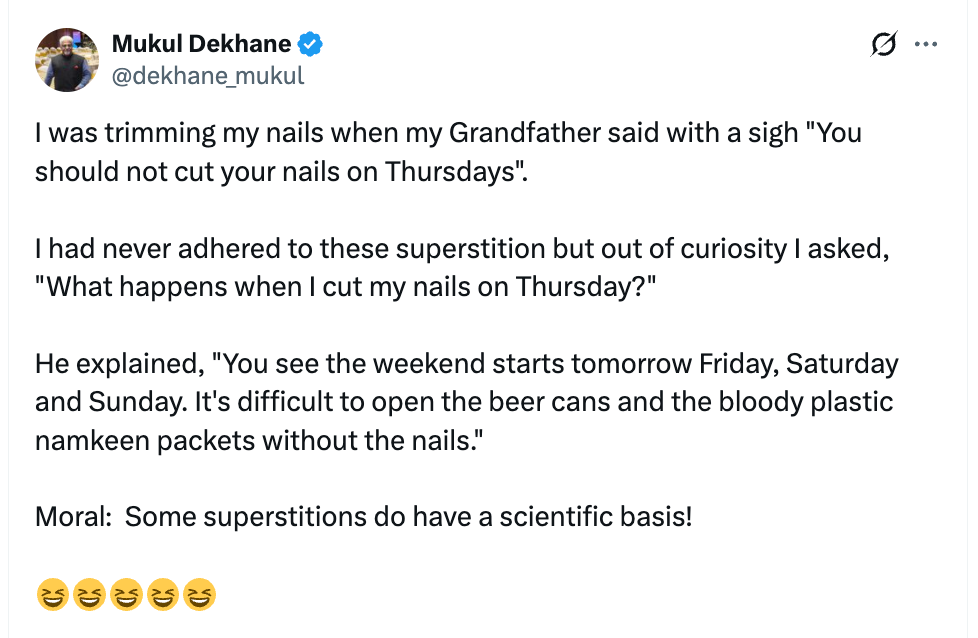
Hahaha, totally agree.
📄 2 Articles of the week
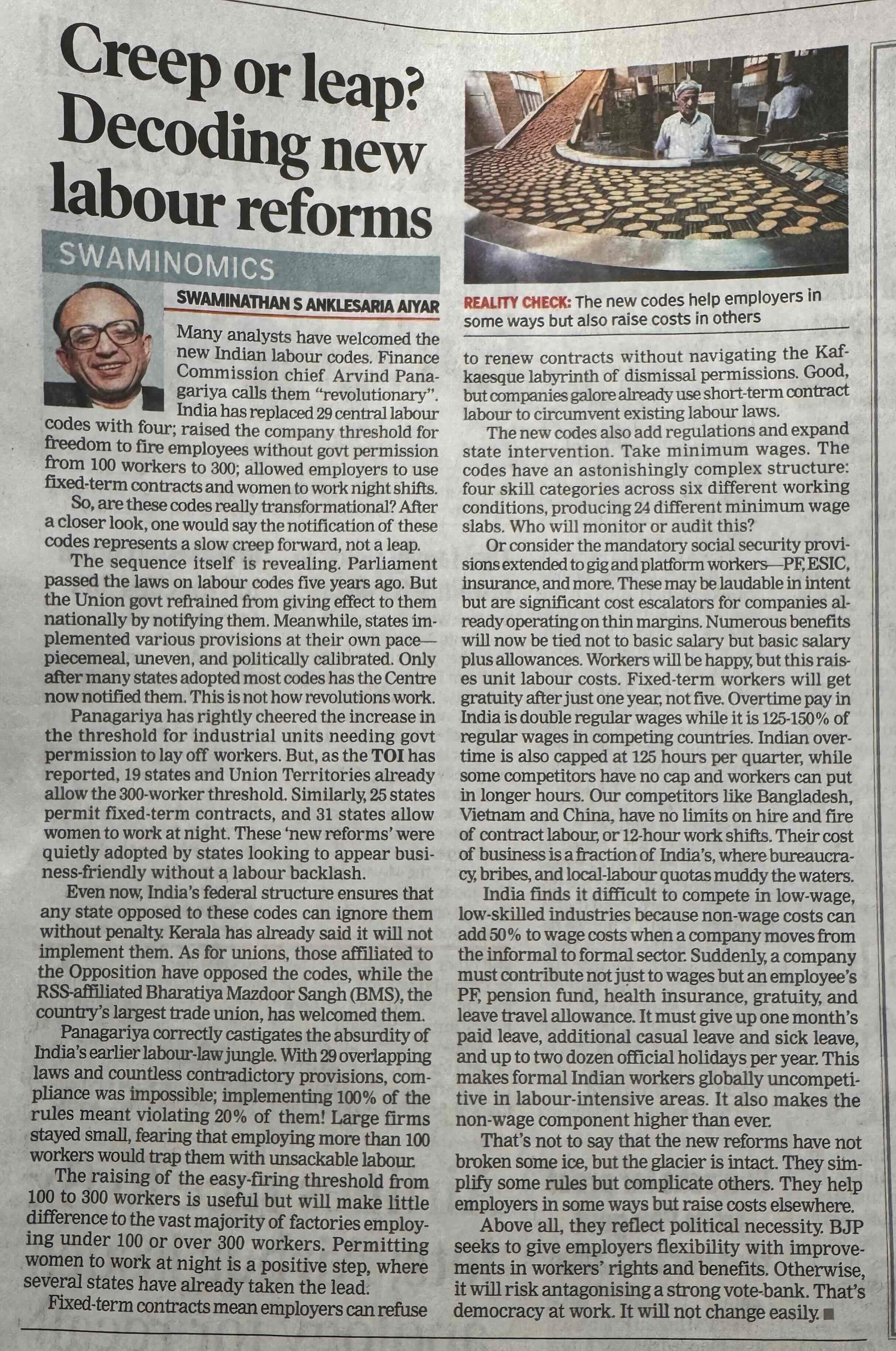
a. ‘Creep or leap? Decoding new labour reforms’ by Swaminathan Aiyar
Last week I had shared an article that offered high praise to the new labour law codes. This one, by the OG Swaminathan Aiyar, is more circumspect, almost sceptical, of the impact of the new laws.
So, are these codes really transformational? After a closer look, one would say the notification of these codes represents a slow creep forward, not a leap.
Aiyar mentions that the increase in threshold for freedom to fire workers from 100 to 300 is good… but was already in place in 19 states and union territories.
He also cautions that mandatory social security provisions can add to cost pressures on companies which are already operating on thin margins.
b. ‘Three buttons to one’ by Grant Lee (Gamma)
In this post, Gamma.ai founder Grant Lee shares a simple insight of how less is more in design (and much of life). He narrates the story of the Apple mouse:
In 1980, Apple hired a designer named David Kelley to reinvent the mouse. (He later founded IDEO. At Stanford, he was my mentor.) Xerox’s version cost hundreds of dollars and was basically a lab instrument. Great for researchers. Terrible for everyone else.
Apple’s brief was simple: make it cheap, make it tough, make it easy enough that you could explain it without scaring people. David’s team pushed for a single button. Not because they didn’t understand the power of three.
Because they understood the anxiety of zero.
He then mentions Gamma’s own one-button moment, when they focused on the first thirty seconds:
So we did something that felt almost irresponsible: We stopped chasing users and spent months fixing only the first 30 seconds.
The goal: any normal person lands, types one thing, clicks one button, and sees something undeniably useful. Only after we nailed that did growth become self-propelling. That was our one-button moment.
🎧 1 long-form listen of the week
a. ‘How to Create Change’ by Simon Sinek
In this short video, author and leadership coach Simon Sinek makes an interesting point. When driving a new/change initiative, we should generate interest among the early adopters and then try to diffuse it in the rest of the audience.
He starts with the law of diffusion:
the law of diffusion is that the first 2.5% of any population… are your big idea people, your innovators (like) Steve Jobs, Richard Branson right… The next 12.5% of your population are your early adopters. These are the people who are very comfortable spending time, money or energy to be a part of something that reflects their own beliefs. They have a pretty good risk tolerance.
The balance two groups are the late adopters and laggards:
… then you have your majority the 68% more cynical, more practical, ‘what’s in it for me’, ‘will I get my money back’, ‘am I going to get in trouble if everything goes wrong’ right…? Then you have your laggards, the last 16%. The only reason they make any change is because you have no choice anymore.
For mass market acceptance, you need to achieve 15-18% market penetration:
… the law of diffusion says that for mass market success or mass market acceptance for any idea or product you have to achieve between 15 and 18% market penetration and there’s a social phenomenon that happens called a Tipping Point
Sinek then comes to the core insight: you can build a brand (slower, admittedly) by focusing on the early adopters:
how do you get from 10% to 15 to 18%? … what I learned is that the way you talk to early adopters is by starting with why. Talk about what you believe, not what you do. Talk about why you’re doing it, not what the plan is. Talk about the dream and what I learned was the more I did that, the more I found the early adopters and they were willing to take risks and they were willing to experiment… I built my entire brand with zero marketing budget and no public relations and at the time no social media, right it’s because I made a decision that I was going to focus only on early adopters.
Sinek then shares a superb example of the use of this idea in action to convince employees of a large company to make a crucial change.
The first attempt by the company failed badly:
… a big company they got 100,000 employees they wanted me to build a millennial training program for them. They launch it and they have PowerPoints Galore saying this is why you need to take part in this program. And people go no… it’s really good and then it fails… it’s good stuff just no adoption and a lot of resistance
Sinek made it work by focusing on the early adopters:
so I said we’re going to do it my way and here’s what we’re going to do because early adopters you want small barriers you don’t want to make everything too easy. So I said I’m going to teach the first class and I don’t know what the program is going to look like. We’re going to teach one class and I’m going to teach it and they have to apply we only have a hundred spaces… And I made them write essays from across the company…(The) application process wasn’t easy. We read the actual essays and chose a 100 people…
Those 100 then went back to their divisions and became the cheerleaders, and the program was a huge hit!
That’s all from this week’s edition.
Photo by Diana Polekhina on Unsplash