
How to Plan your Writing by Dan Pink
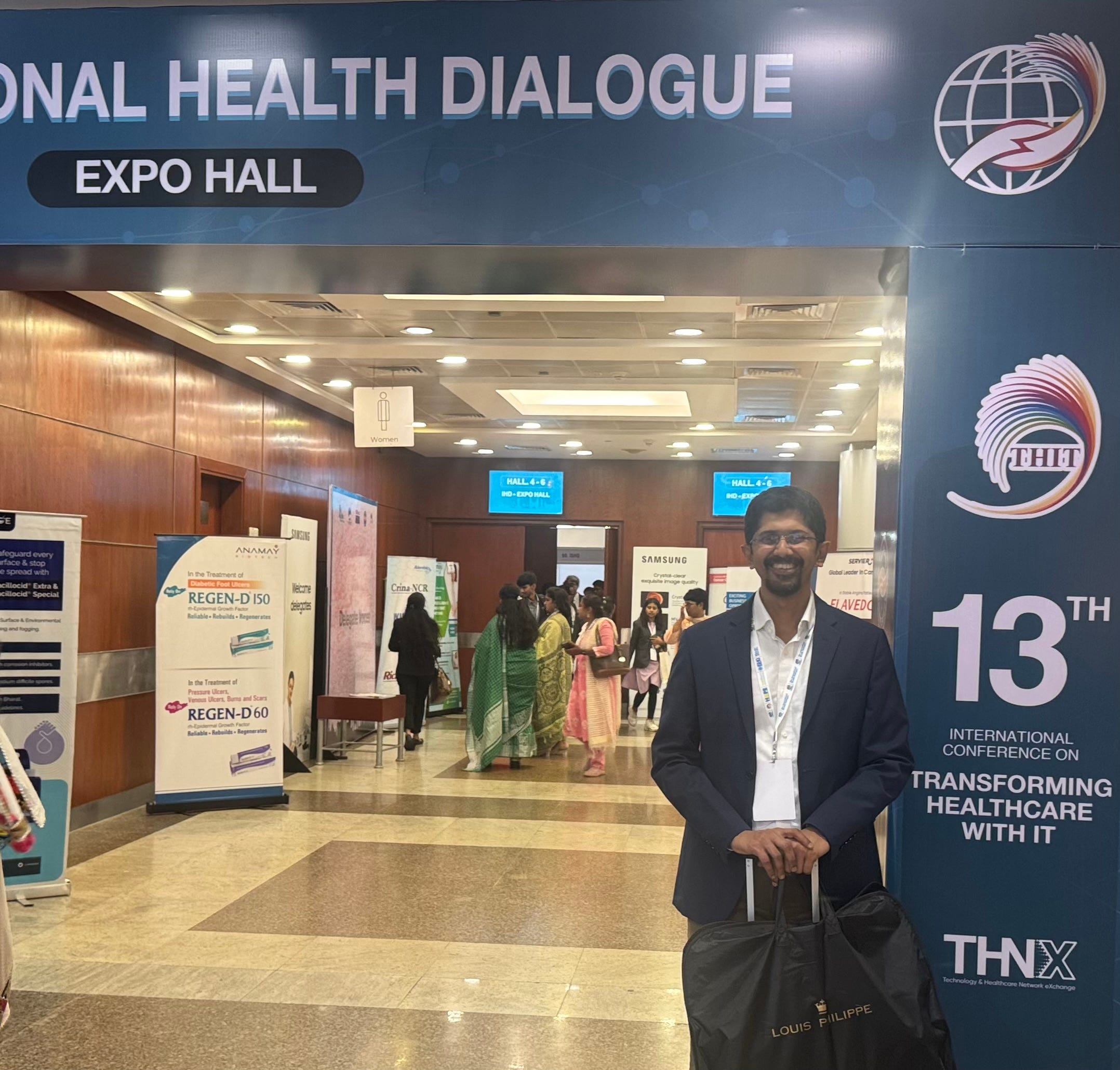
This week I gave a talk on storyteling to an unusual group—medical professionals!
It was at the massive ‘International Health Dialogue’ conference organised by Apollo Hospitals, in Hyderabad.
It was fun sharing some ideas on how doctors (and other healthcare professionals) can use better storytelling to improve patient compliance and outcomes.
In other news, Arijit Singh announced his retirement from movie playback singing recently, and I reflected on how it might be an interesting example of someone optimising for the 5Fs of Ikigai.
Also, this week I recorded 4 videos for the YT channel in the studio. Now the editors will do their magic, and hopefully I can start releasing them over the next few weeks.
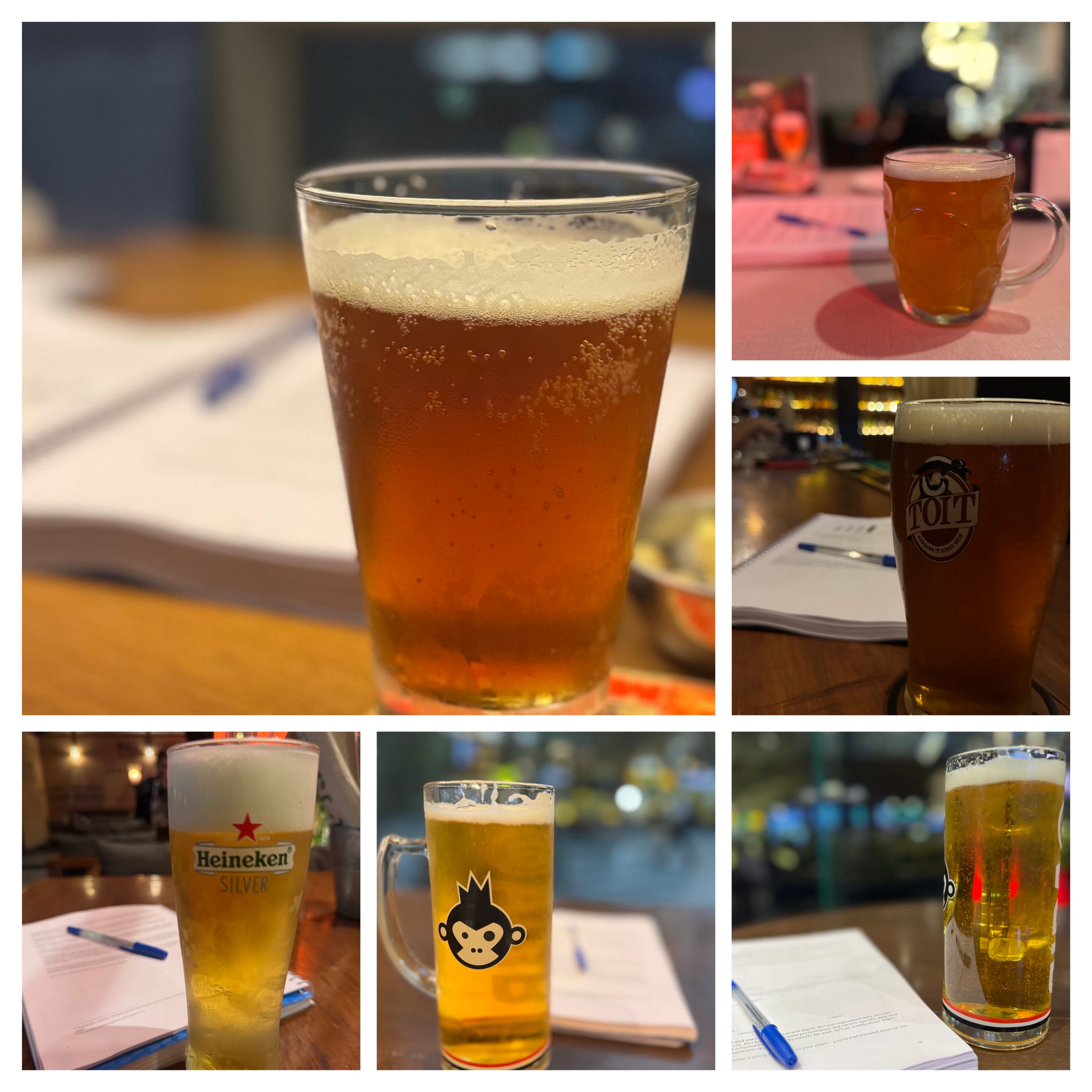
Finally, I loved writing this post about my favourite part about writing my book: editing over beer.
And now, on to the newsletter.
Thanks for reading The Story Rules Newsletter! Subscribe for free to receive new posts and support my work.
Welcome to the one hundred and fifty-third edition of ‘3-2-1 by Story Rules‘.
A newsletter recommending good examples of storytelling across:
- 3 tweets
- 2 articles, and
- 1 long-form content piece
Let’s dive in.
𝕏 3 Tweets of the week
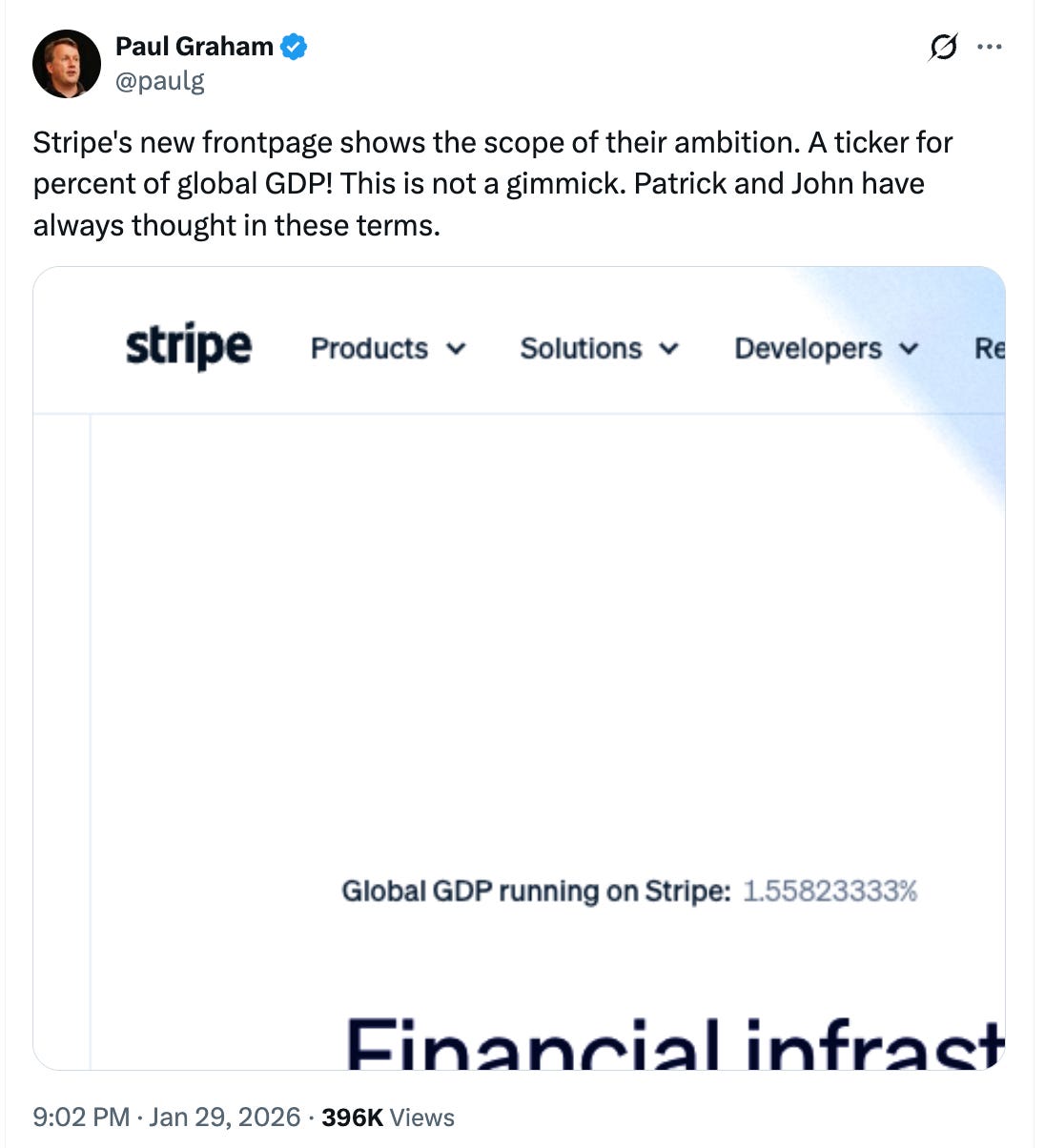
Whoa, talk about tracking an ambitious metric!

This is a fascinating visual—check out the video to see how small our sun is compared to the Milky Way.
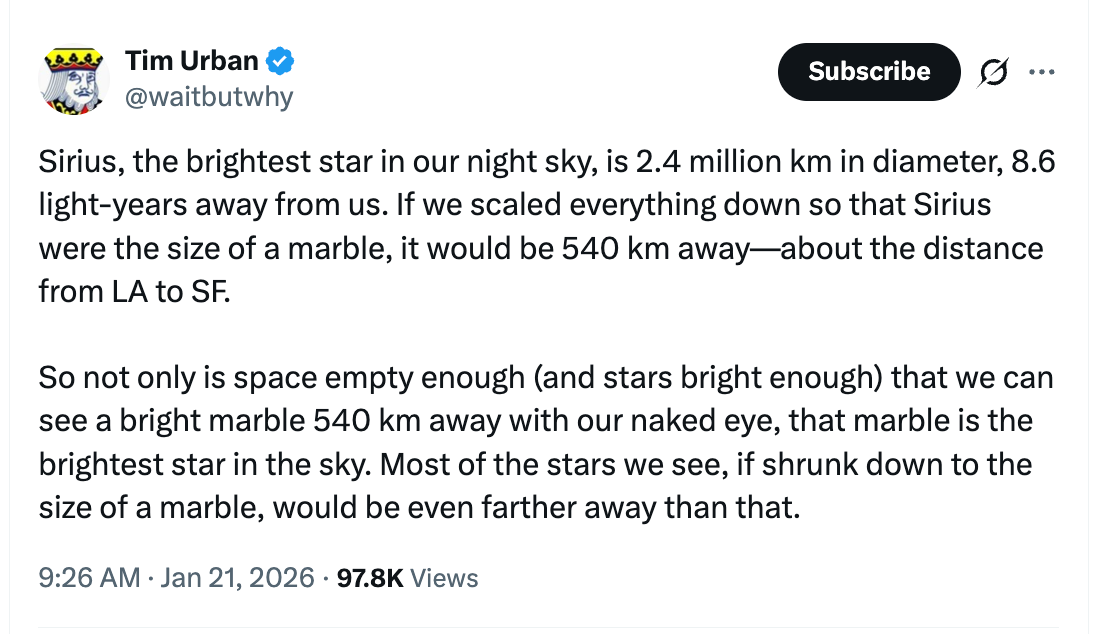
Another great example of making big numbers relatable. Awe-inspiring stuff.
📄 2 Articles of the week
This is a superb (and uplifting) data story on how India is doing better than other countries at using renewable energy. There are so many cool data-storytelling lessons from this piece.
It starts with a clear BLUF summary at the top:
India is forging a better path to the electrotech future of energy. Cheap solar and batteries are enabling India to develop without the long fossil detour taken by the West and China.
This is a fascinating visual to explain the above point:
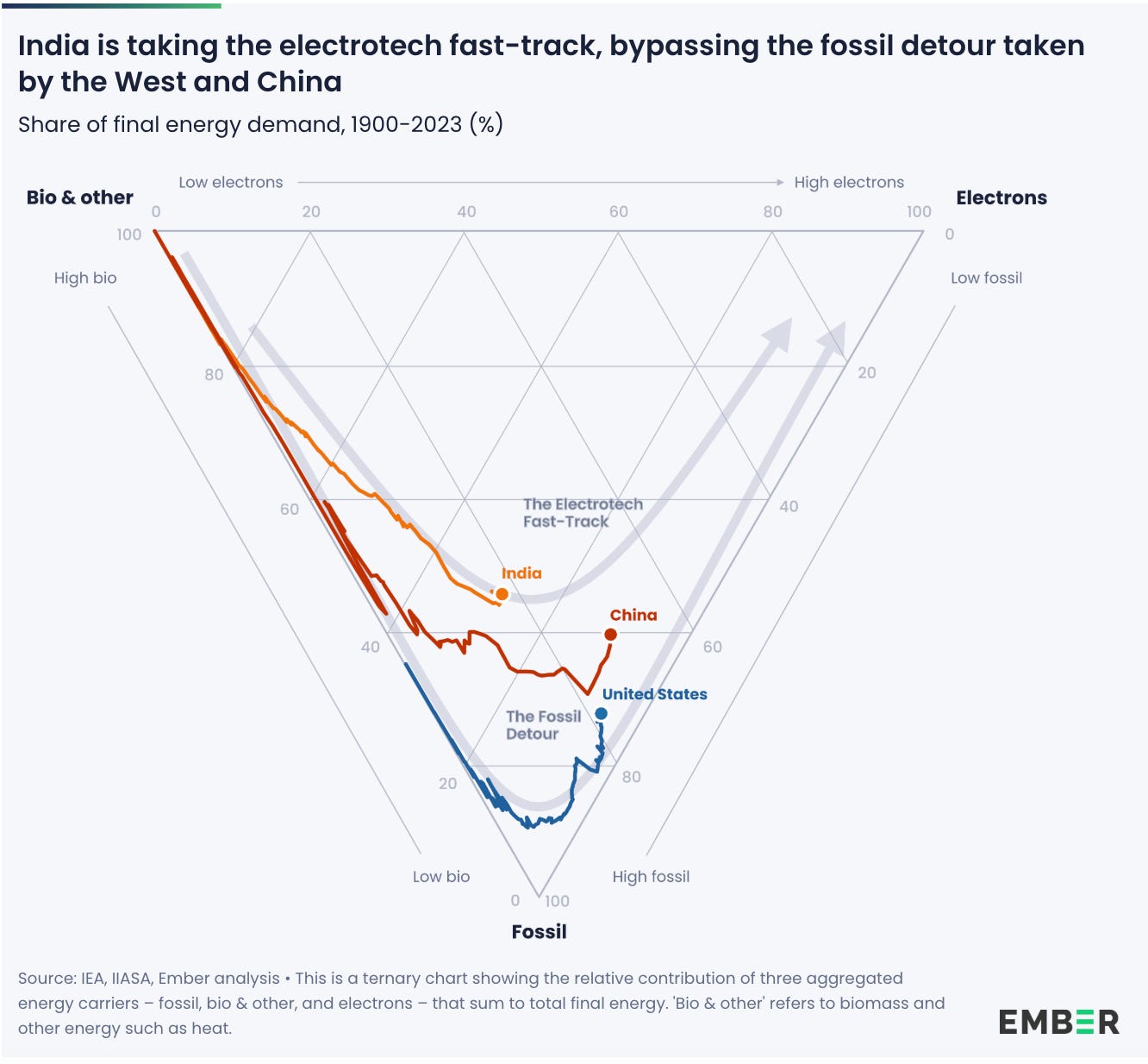
In norm-variance it is critical to compare metrics with the right norm, based on context. And so, instead of comparing India with present-day China, the authors compare 2025 India with 2012 China—when it was at the same level of PPP per capita income (although, to be fair, at one level that is not comparable because solar energy prices were much higher then):
It is more reasonable to compare the two countries at equivalent levels of development. When we do so, a different story emerges. India is generating more solar electricity, burning far fewer fossil fuels and electrifying transport faster than China did at an equivalent GDP per capita.
And the authors do acknowledge that with data on falling input prices:
In contrast, as India crosses 1,500 kWh of electricity use per capita, now, solar-plus-storage costs around half as much as new coal plants. This gap is widening as solar and battery costs fall along predictable learning curves, while coal power becomes more expensive with declining utilisation.
Transport tells a similar story. In 2011, when China reached road transport oil demand of 150 litres of gasoline equivalent per capita, batteries were ten times more expensive than they are now, and the electric vehicle industry barely existed.
Some more right-sized comparison of share of solar in total generation:
Looking at electricity generation first. In India, solar reached 5% of total generation at around $9,000 GDP per capita; in China, it took until about $23,000 to reach that level.
And postitive implications for India’s manufacturing story:
There are strong signs India is seizing the opportunity, starting with its electronics industry. India’s electronics industry is surging – nearly sixfold from $22 billion in FY2015 to about $130 billion in FY2025. Domestic mobile phone production alone has risen from 2 million units in 2014 to 300 million a decade later. This matters because, as China has shown, electronics is the gateway to electrotech. The capabilities built for consumer electronics spill over into solar panels, batteries, and EVs. A mobile phone, after all, has more in common with a solar panel than a gas plant does.
My only concern is that the article seems overly upbeat and does not talk about the pitfalls if any. But overall a great data storytelling example.
b. ‘The gig economy and the public interest’ by Nitin Pai
In the emotionally-intense atmosphere of gig-economy working conditions, Nitin provides a calm, sensible and nuanced voice of reason.
It would be disastrous to put unnecessary government oversight on a high-growth, employment-generating part of the economy:
Unfortunately, the anecdotal and emotional framing of the debate does a disservice to the very cause it seeks to promote. Government intervention is not the answer: we are still trying to untangle the labour laws that still prevents Indians from working in manufacturing industries. Labour regulations tend to create more jobs for labour inspectors while employers replace labour with capital. So we must be careful what we wish for.
Indian gig-workers are doing better than their SE Asian and African counterparts:
A recent study by Achyuta Adhvaryu and colleagues shows that compared to the Indonesian and Kenyan counterparts, gig workers in India (in 2024) tend to be better off: working fewer hours, at higher efficiency levels, for better pay. Now Rs 27000 per month for 58 hours of work per week is not bad starting pay package for someone with just a basic education.
Gig work has provided the first rung; the government/rest of the economy needs to provide the higher rungs:
The good news is that gig work works as the first rung of the ladder. The Indian economy must create higher rungs and equip workers to climb them.
Important role of being a financial safety net:
Now the gig economy itself is a financial safety net: the study shows that one in three drivers across countries relies on platform work during emergencies or slow periods in other work. This suggests that the expansion of the gig economy from home delivery to domestic services is desirable, as workers will have more options to choose from.
I loved this counterfactual:
Had it not been for the gig economy, I am pretty sure that politicians and well-meaning people would be making the case for an urban NREGA.
🎧 1 long-form listen of the week
a. ‘How to Write Structurally Well’ Daniel Pink on the How I Write podcast
Dan Pink is one of my favourite nonfiction storytellers and I’ve personally benefited from his books like ‘When’ and ‘To Sell is Human’.
In this insight-dense conversation, he goes into the weeds of his super-successful writing process. Some great ideas for people who want to improve their writing.
Want to write a book? Just write 500-800 words a day for 100-150 days (and keep out distractions):
For me, because I’m a pretty slow writer, it’s often not a very high word count. Sometimes it’s 500 words, sometimes it is 700 words, 800 words. Um, that’s hard for me. Like, like writing is is still really, really hard for me, even though I’ve been doing it my whole life. And so, I will have that word count and I will I don’t bring my phone with me into the office. I don’t open up email. I don’t do anything like that. And then I will just crank until I hit that word count. Then there’s a moment of liberation where I’m like, “Oh, I’ve done it.” And then I can like watch some sports highlights or check my email or do the other kinds of things. And then I do it the next day and the next day and the next day and then and the next day. You would do that for a certain number of days until you reach 80,000 words.
Pink believes that when you are writing on a topic, it’s useful to talk about it with others:
There’s two kinds of writers. There’s writers who are like, “No, I never talk about my writing before I publish it.” And then there’s people who are like, “Yeah, I’ll talk about it because talking about it helps me structure the ideas, form the ideas.”… For me, I think it’s really important to socialize ideas and when I have something that I’m working on, I actually in many cases like to talk about it because I want to see how people react. You know, are they are they dead in the eyes? Are they asking me questions? Are they intrigued? If I say something, do they say, “Oh, that’s interesting.” Do they say, “That’s interesting. have you thought about this? Do they say, “That’s interesting. I disagree with you.” That’s really helpful to me.
(Also), You’ll be blocked when you’re trying to think about on your own. All of a sudden, you explain it some to somebody else. It’s like it’s weird. Your brain automatically structures it, makes sense of, okay, you do more of this, less of that. So that’s important to me.
The structure of the book is really important and Pink spends a lot of time trying to find it:
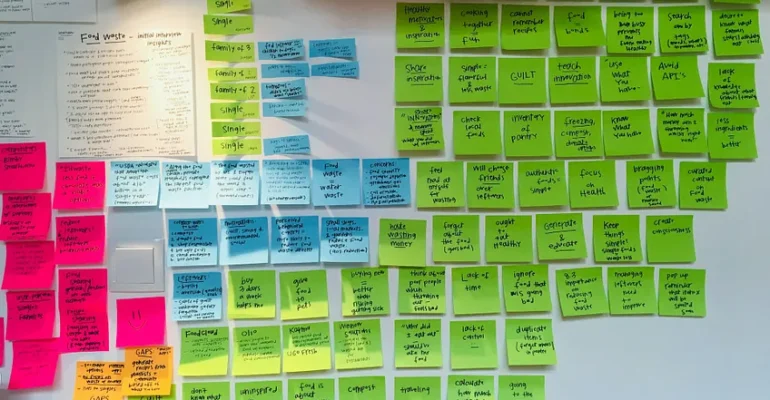
…especially for books the structure of a book is really really important. I can’t write a book unless I see at least the skeleton of it the structure of it somewhere. So I’ll spend months doing research and reporting to try to find the structure. And what I will often do is put either a whiteboard or big post-its with my first kind of scratchings about what that structure might be. And I will literally turn in my chair. I have a swivel chair. Here’s my desk. Literally turn and behind me I’ll have post-its. And I will sit there and just look at that to try to get the structure because I can’t really write anything until I see the structure of the until I see the structure of the building
This is a long extract, but I love how deep into the weeds Pink goes to describe the different structures he explored for this book ‘When’ before finalising it:
Let’s take a book like ‘When’ the book about the science of timing, right? So I had all this research. I went through something like 600 studies about timing because I realized that what was happening with timing is that you had these different disciplines that were all asking similar questions. So it it’s the similar questions in like in economics and in neuroscience and even in medicine. So how do we make different decisions at different times of day? How do beginnings affect us? How do midpoints affect us? And so I had this whole kind of melange of studies and I initially said I initially started organizing it like day, week, month, year. So that was going to be the organizing principle and it just didn’t work and I would stare at it and stare at it and stare at it and say I have nothing to say. Then I started thinking about it in domains. All right. Timing at school, timing at work, timing in health, timing in leadership. And I tried that. Stare at that on the wall. And then finally in through some conversations, I said, “Well, maybe I just need to do it more conceptually.” And I said, “Okay, what if I do like timing in timing in a day?” And then I started thinking about something about beginnings and something about midpoints and something about endings that the domain itself was less important health or leadership or whatever than the fact that beginnings operate on us one way, midpoints operate us on another way. So it wasn’t so much the week wasn’t significant there the midpoint was significant there. So over time in this tortured way kind of unpleasant in a way I kind of came to that way of organizing it put it there and said okay now I can begin writing. And the structure doesn’t always stay the same. Once I come up with it you have to stress test it with what you’re writing.
Pink compares writing (nonfiction) to engineering, not art:
… for me writing is engineering. It’s an act of engineering in the sense that you’re building something that has to work. For me, it’s less sort of classically artistic thing in that you’re building something that has to work and you’re testing it and you’re stress testing it and you’re seeing, are these walls staying up? Are the walls strong enough to support this kind of roof?
A good storyteller should be a translator:
Perell: You described yourself as a translator.
Pink: Yeah. The academics are often speaking to highly specialized audiences and um they often speak in their own coded vernacular and if you can be bilingual that can be helpful.
Listen to the (just) 52-min conversation for more such insights!
That’s all from this week’s edition.
Photo by Diana Polekhina on Unsplash