Stories from Amritsar’s food scene

Wishing a wonderful, safe, healthy and fulfilling 2026 to you and all your loved ones!
This week’s edition is a bit of a personal one. From 27-30 December, we did a fabulous trip of Amritsar with friends. Instead of the long-form piece, I share some thoughts and reflections from the trip.
And now, on to the newsletter.
Thanks for reading The Story Rules Newsletter! Subscribe for free to receive new posts and support my work.
Welcome to the one hundred and forty-ninth edition of ‘3-2-1 by Story Rules‘.
A newsletter recommending good examples of storytelling across:
- 3 tweets
- 2 articles, and
- 1 long-form content piece
Let’s dive in.
𝕏 3 Tweets of the week

This is a superb B2B sales technique. Try it out when applicable!
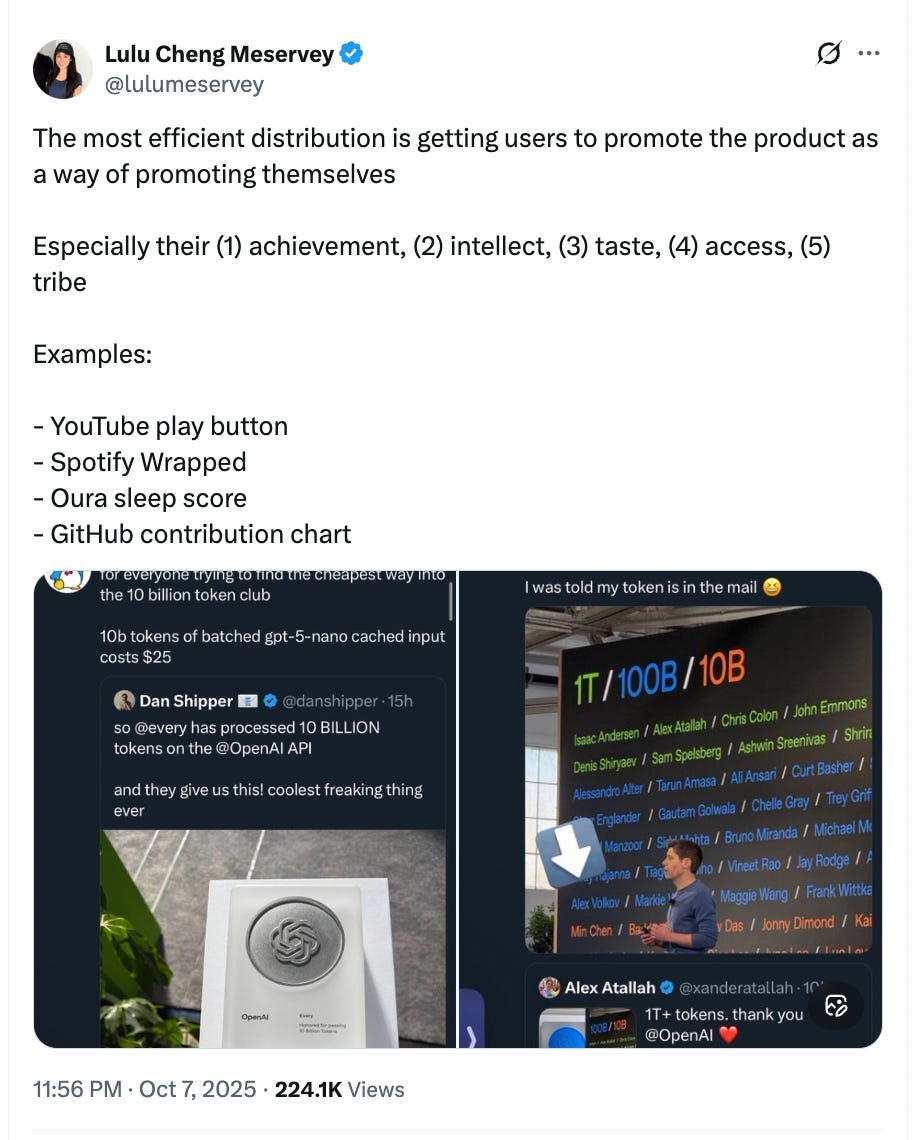
Another cool technique to drive sales—can you get your users to advertise their usage of your product?!
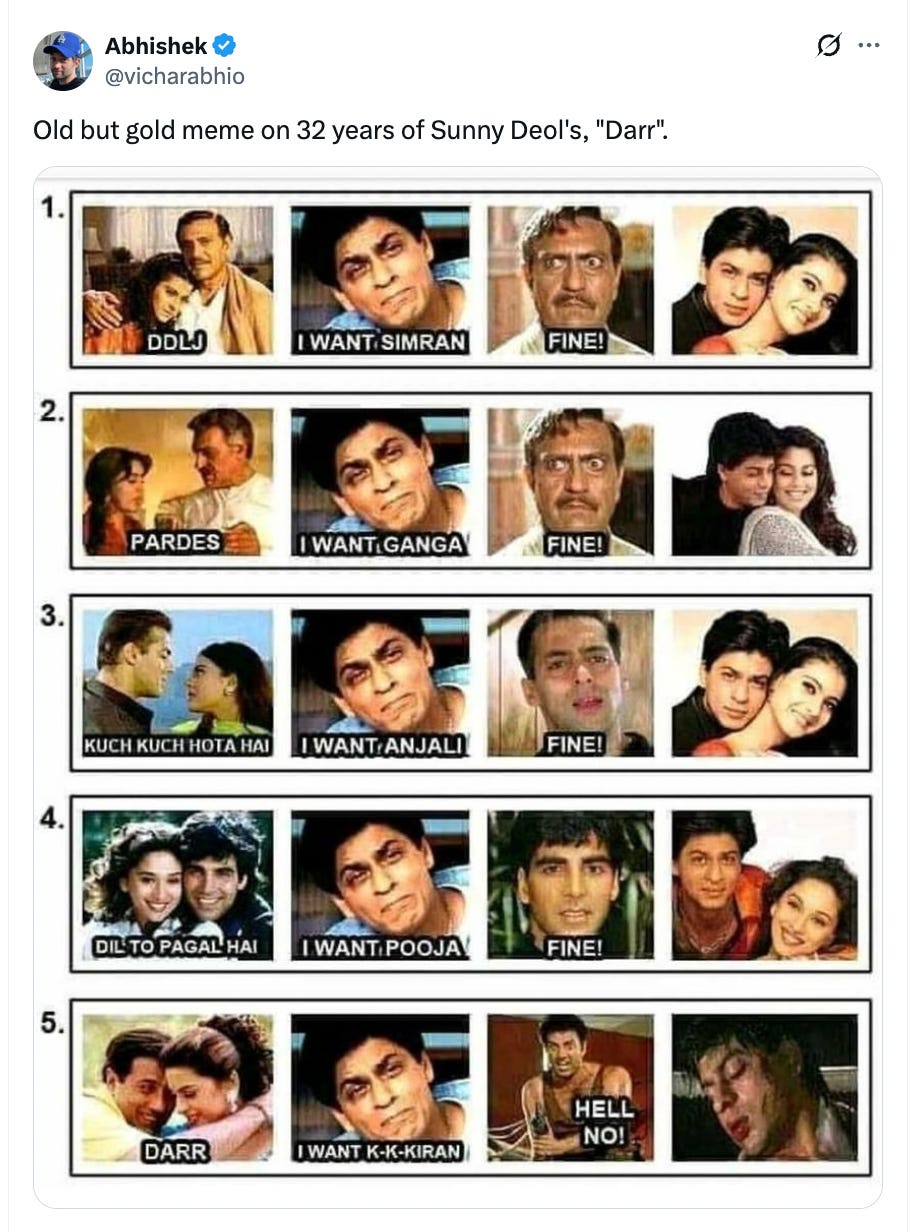
Hahaha, hilarious
📄 2 Articles of the week
a. ‘When someone says they hate your product with a burning passion’ by Lulu Cheng Meservey
In this post Lulu Cheng Meservey gives a masterclass on how to respond to negative feedback on your company or product. This is high-quality thinking, and we are lucky it’s available for free!
Meservey starts with a cool thermostat analogy for how to think about your reputation:
Imagine a thermostat for your credibility. People form an opinion on what the correct setting should be, and they regulate if the reality seems off. If you’re above their setpoint, people feel you’re overrated and want to bring you down; if you’re below it, people feel you’re underrated and want to build you up. And the farther off you are, the more they’ll overcorrect.
When someone is frustrated with you (or your company, or your product), they have a view of how much you should be dinged for something. Venting in public is a way to regulate your reputation and achieve the proper homeostasis, like turning a thermostat toward the desired setting.
She suggests that we should respond to the emotional substance of someone’s feedback, not to their factual form (loved the last line!):
This means that the substance of someone’s feedback is totally separate from their frustration or desire to be heard. Complaints often seem unfair and you might want to jump to fact-checking, but that won’t get anywhere unless you first resolve the frustration and make people feel that you actually listened. (It turns out facts do care about our feelings.)
Her key point: respond to negative feedback without pushing back, and keep in mind the north-star responsibility—of improving your product:
Imagine a scenario where you get negative feedback, and you overrule the instinct to push back. Instead, you listen to the feedback, you embrace the responsibility to make the best product possible, you even thank them for caring enough to share their thoughts (remembering that your real enemy isn’t negativity but indifference).
b. ‘10 Ideas for 2026’ by Shreyas Doshi
Product Management expert Shreyas Doshi shares some of his wisdom on how to think better.
One idea talks about when to focus on the thoughts vs. the actions that lead to success:
If you want to tell the story of success, focus on the actions that led to it.
But if you want to achieve success, focus on the thinking that led to it.
We need to keep in mind that sometimes our PR department outdoes the Strategy department:
A subtle reason why smart people make blunders when making career decisions and investment decisions is that they want to feel smart while making the decision and explaining it to others. The seductive appeal of feeling smart trounces the rational goal of making the correct decision.
🎧 1 long-form read of the week
a. Thoughts from our Amritsar trip
From 27-30 December, we did a fabulous trip of Amritsar with friends.
The trip was memorable for many reasons – mainly for catching up with dear friends and engaging with their lovely kids.
The places we visited were also memorable—the jaw-dropping Golden Temple, the patriotic fervour-inspiring Attari Wagah border, and the poignant, heart-rending Partition Museum.
But the real star of the show was the food. Uff, the food.
So here’s the deal. Food in Amritsar is really good, but there are many hidden gems, sprinkled across the city. Thankfully, one of us (Shradha Vaid) was a super-enthu foodie and did a ton of research, making a list of must-eat places.
Visiting these iconic places (list at the end) made me realise a few things.
1. Less is more: Focus can pay dividends
Some of the most iconic places kept things really simple. They just had one (or a few) item/s on the menu.
For example, Pehelwan Kulcha just had one item, Amritsari kulcha, on the menu with just two variants – spicy and medium. (Take the spicy one!).
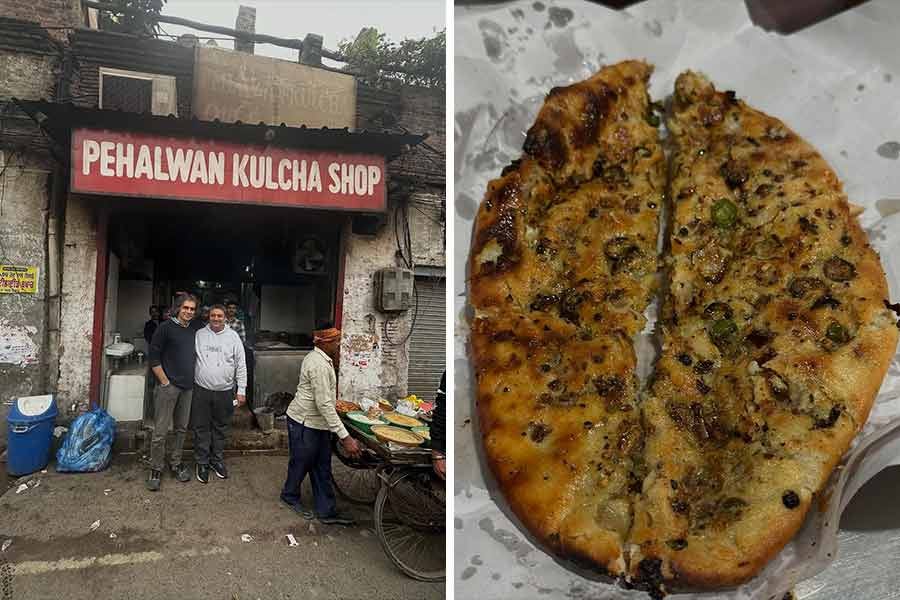
Picture this scene. Narrow street. Dinghy looking shop. Big crowd to get in. Tiny space inside. Small tables, narrow benches for chairs. People sharing tables. 10 of us scrunch into a space that should ideally seat 5.
The kulchas were ordered even before we sat down. They arrive, piping hot, served with a simple choley garnished with sweet and sour onion chutney.
They. Are. Heavenly. Probably the best kulchas I’ve had. The balance of elements, across what I call the 3Ts is superb.
- Taste: Spice from green chillies, salt from the filling and choley, smoky flavour from the burnt portions, sweet and sour from the chutney.
- Texture: Crisp kulcha covering, soft and flavourful filling inside.
- Temperature: Piping hot kulchas paired with cool choley+chutney.
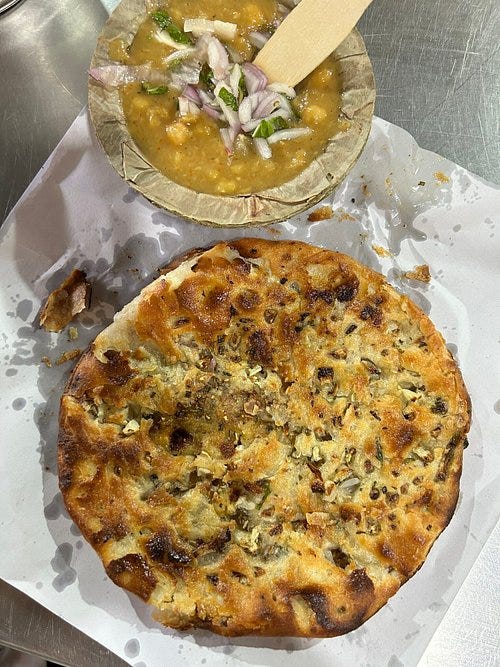
It’s an absolute must visit.
We saw a similar deal in one more iconic place—Kanha Sweets—which served a yummy puri bhaji. Just one dish was the main attraction.
Similarly, Gian di lassi was only focused on lassi and sweets.
It takes guts to focus on one product… and refuse when customers ask for more. (As against many eateries which have every possible cuisine—from Punjabi to Asian to Continental and South Indian—on the menu…).
- If the price is cheap, the real cost is hidden
Across all places, the food was priced super-cheap. But that was not the only cost we were paying. We were paying the cost of navigating frustrating traffic, crazy crowds, packed and dirty streets, zero traffic sense, constant honking, frayed tempers, and did I mention the crazy crowds…?
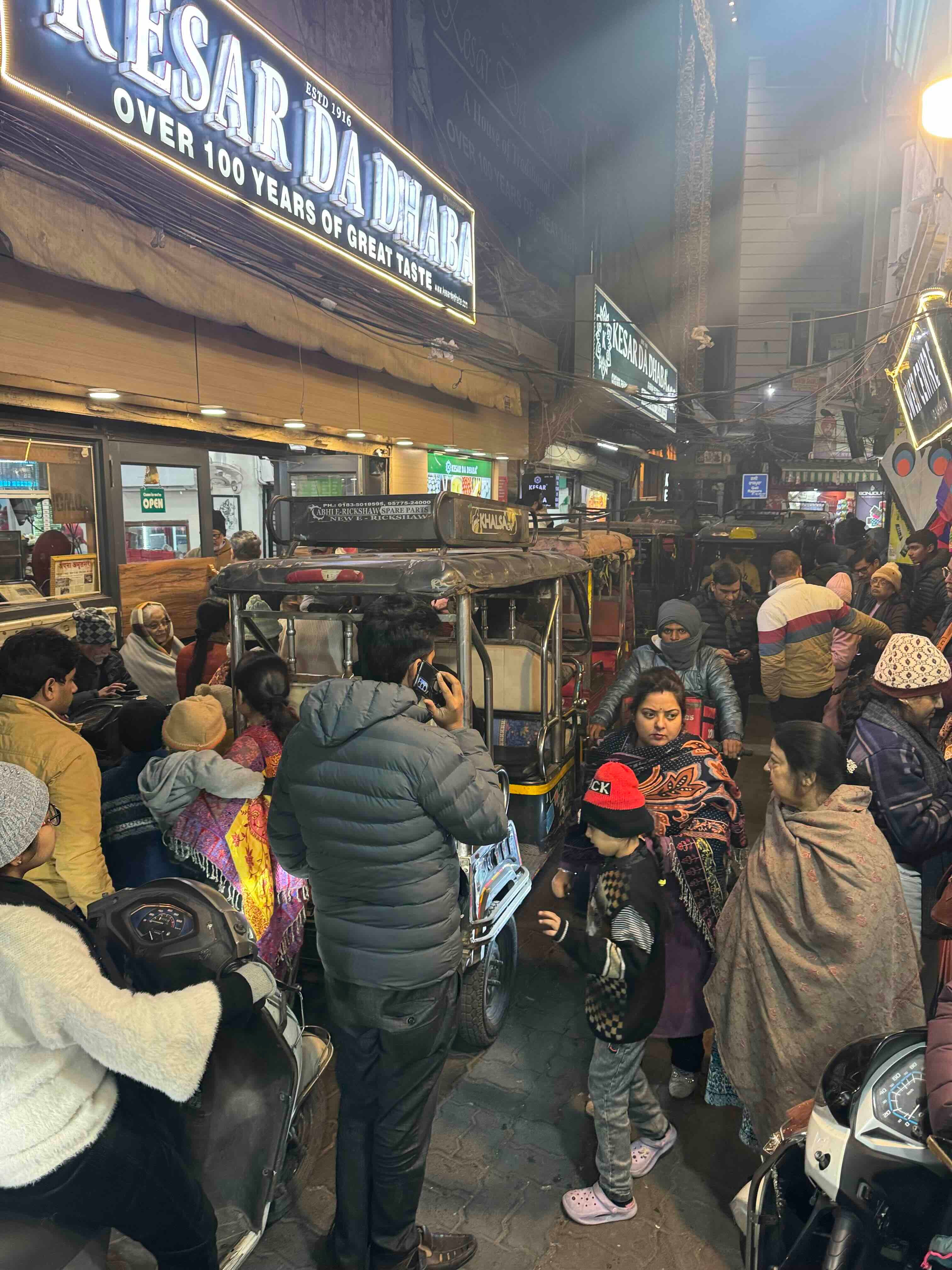
It’s a massive test on your patience (especially with kids constantly asking “how much longer”!). But the rewards are worth it.
- An Amritsar food tour makes for a great OR (Operations Research) problem
The objective: To visit as many iconic food items as possible and enjoy them
The constraints: Several, including:
- Knowing where to go and managing the group’s preferences: It takes a fair bit of research, especially in a large group with differing preferences
- Opening and closing times: Most places have stated opening and closing times. Two places we went to closed before the stated closing time since they had run out of raw material.
- Distances and traffic: Even if distances are not much, but (especially in the old city, and even in parts of the new city), navigating traffic is an absolute mess. Small e-rickshaws are convenient, but sometimes cold for kids. Cars are comfortable, but struggle to navigate narrow streets. Calling the drivers to the designated points can be an exercise in frustration… Plus many streets are off limits for cars. There are one-ways, blockages… all drivers may not know about these
- Kids (and adults) waking time: Mornings are especially cold and waking up kids (and adults) can be tricky!
- Managing hunger: The idea is to also space out meals and make sure you don’t reach an iconic place on a full stomach. Also to pace yourself in the early visits
- Managing health: Kids (and adults) can fall sick. One kid fell ill and that knocked some of us out of circulation.
- Managing other needs: Like shopping, visiting the Golden Temple, Jallianwala Bagh etc.
I’m sure there are food tour operators who have designed walks keeping these constraints in mind. But given each group’s specific preferences and constraints, it would still be a challenging exercise.
A few quick suggestions if you are planning a trip:
- Try and stay near the city centre. Easy to visit all places
- Research and make a plan beforehand
- Use a map to create a route
- Within the old city, consider hiring an e-rickshaw for the entire duration. Easiest to get from place to place
Overall, the city does demand its pound of sanity from the visitors, but the rewards… uff, the rewards are heavenly.
Wishing you all a very happy, healthy and fulfilling 2026!
Btw, here are the eateries we visited during our trip (all suggestions credit to Shradha Vaid!):
Kulcha
- Pehelwan Kulcha
- Kulcha land, Ranjit Avenue
- Ashok (Matthi Kulcha)
Dhaba/Other street foods
- Lubhaya Ram (Aam Papad Chaat)
- Kanha Sweets (Aloo Puri)
- Brijwaasi Chaat (Bun Tikki)
Lunch/Dinner
- Crystal Restaurant (also serves beer 😍)
- Kesar ka Dhaba
Tea
- Giani tea stall
Non Veg
- Makhan fish (Some group members had this)
Sweets
- Gurdasram Jalebiwala (Some group members went here)
Lassi
Gian di lassi
That’s all from this week’s edition.
Photo by Diana Polekhina on Unsplash