
The Canadian PM’s Davos Speech

In this week I did three sessions for large audiences.
One session was a 75-minute keynote (in-person) for 400 sales leaders for a leading pharma company. I had fun using movie references, running an interactive quiz and getting the participants to share their stories.
It’s always great to draw on the energy of hundreds of people and leave them with ideas that they can use in their work.
A second session was a 1-hour virtual talk to around 250 managers and leaders from a global tech leader. Highly participative audience!
Finally, I was part of a discussion on storytelling and narratives for non-profits for Flipkart Foundation, with an audience of about 170-odd.
If some of you are wondering, ‘don’t you feel nervous talking to 400 people?’, I’d say that it’s a bit like swimming. If you can swim in a 6-feet pool, you can also swim in a 60-feet lake or 600-feet ocean. The basics of audience engagement remain the same. In fact the energy of the larger audience can be invigorating!
—
Also, I shared my latest video on the YouTube Channel—on the power of choosing the right words (and sentence construction) for your stories:
And now, on to the newsletter.
Thanks for reading The Story Rules Newsletter! Subscribe for free to receive new posts and support my work.
Welcome to the one hundred and fifty-second edition of ‘3-2-1 by Story Rules‘.
A newsletter recommending good examples of storytelling across:
- 3 tweets
- 2 articles, and
- 1 long-form content piece
Let’s dive in.
𝕏 3 Tweets of the week
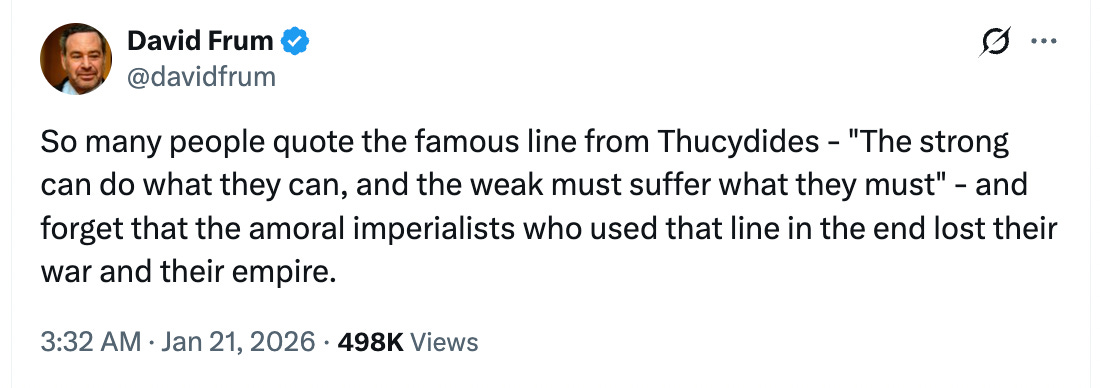
Insightful thread. I had heard the Thucydides quote, but didn’t realise that it was more of a cautionary lesson than a statement of fact.
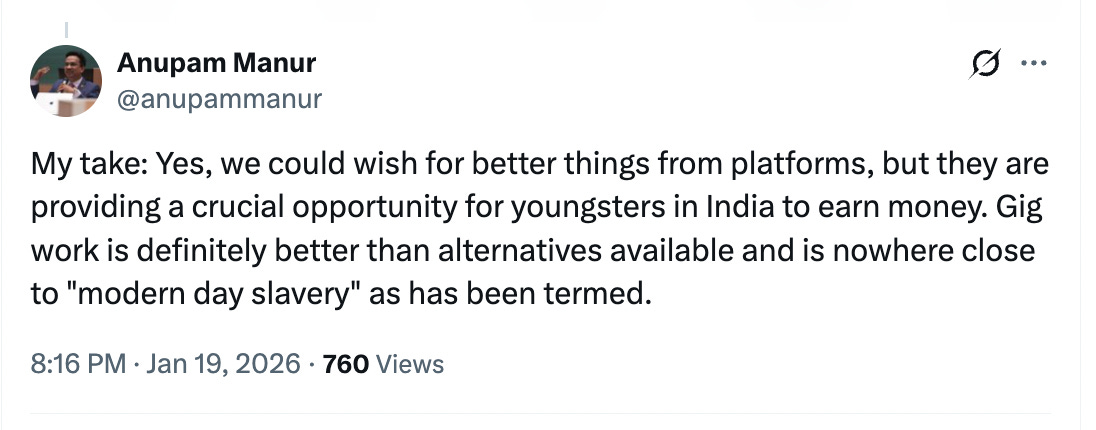
Very well argued thread by Anupam Manur. Don’t blindly criticise gig work without considering the counterfactual (the alternative employment sources) available to those looking for work.
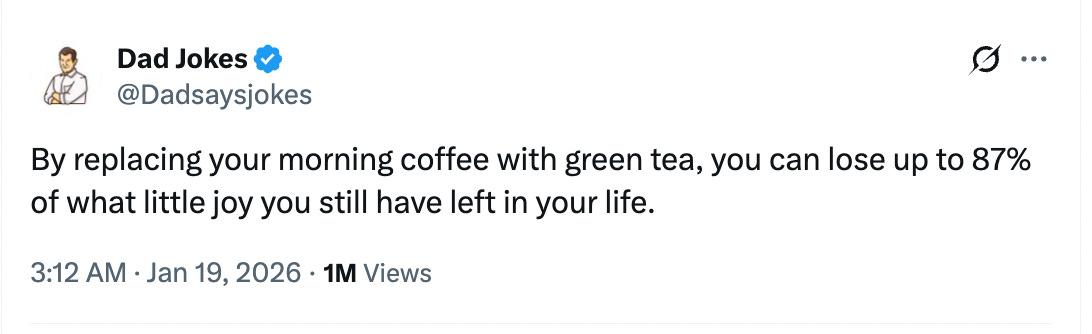
Hahaha, totally agree.
📄 2 Articles of the week
a. ‘India’s lesser known Goldmines: Masala movies, South India and YouTube’ by Dharmesh Ba
This is a fascinating story of how a little-known producer saw the hidden potential in dubbed movies from south India, and made a killing with his prescient bets.
Dharmesh starts with a classic surprising revelation:
Most people think Baahubali made North India fall in love with South Indian cinema. They’re wrong.
A YouTube channel did.
I just loved this Rajamouli story that Dharmesh shares:
When Rajamouli was on a trip to explore locations for the film RRR, he observed that Telugu actor Allu Arjun was a star in the North and had fans of his own. The crazy part is that Allu Arjun had never acted in a single Hindi movie. After returning, Rajamouli reached out to the director Sukumar and urged him to release his upcoming Allu Arjun film on a pan-India scale. Sukumar was hesitant, but Rajamouli persisted. He even personally spoke to the distributors to secure a wide release. Eventually, the film was released in Hindi with a massive launch and grossed over 300 crores, with nearly 100 crores from Hindi alone.
That film was Pushpa: The Rise. (Part 1)
Why is this story relevant? Because Allu Arjun’s popularity in the North can largely be traced back to a single YouTube channel – Goldmines. Manish Shah is the founder of Goldmines.
First of all, isn’t it amazingly secure of Rajamouli to share the insight with (his “competitor”) Sukumar? It’s heartening to know…
And I loved how Dharmesh unveiled Manish’s name at the end of the para.
These numbers blew my mind:
The flagship Goldmines YouTube channel isn’t just another movie channel. It’s the largest movie YouTube channel in the world and ranks 15th globally by subscribers, with over 108 million subscribers. The channel has amassed a staggering 31 billion minutes of lifetime watch time. Its most-viewed video – the Hindi-dubbed version of KGF: Chapter 1 – alone has over 850 million views. That number is almost hard to comprehend. And it’s not a one-off anomaly: the channel regularly hosts full-length films that cross the 100-million-view mark.
Read the entire piece to know more such fascinating insights. Great work by Dharmesh!
b. Swapnika Nag on the changing nature of movie storytelling
In this short LinkedIn post, Nag culls out a fascinating tidbit from an interview featuring Hollywood star Matt Damon:
Netflix now requires films to reiterate the plot 3-4 times (very obviously in the dialogue) to make sure you follow it while you are on your phones
For a long time, the cardinal principle in telling stories was to “show, don’t tell” i.e. let the viewer immerse themselves and internalize the plot
Our fleeting attention spans and phones flipped that.
So now, expect more ‘exposition’ and dialogues between characters (even as they run from one crisis to another) explaining the plot for distracted viewers!
The business equivalent for me is an Executive Summary slide that gives an overview of the entire narrative and can be shown periodically, to ensure that the audience is with you throughout.
Damon also made another interesting point in the interview—about the need to have a high-octane set piece in the first 5 minutes of the movie:
(The) standard way to make an action movie that we learned was you know you usually have like three set pieces. One in the first act, one in the second, one in the third and you know you kind they kind of ramp up and the big one with all the explosions and you spend most of your money on that one in the third act. That’s your kind of finale. Um and now they’re like can we get a big one in the first five minutes to get somebody, you know, we want people to stay… tuned in.
The business implication? We need to have a hook at the beginning of our presentation or talk that tells people what’s in it for them and makes them curious to stay till the end.
📄 1 long-form read of the week
a. Mark Carney’s speech at Davos on middle powers navigating a rapidly changing world
Political speeches tend to be mostly boring—people repeat the same platitudes and speak to their base.
But this one, by Canadian Prime Minister Mark Carney at the World Economic Forum at Davos, has gotten a lot of traction among leaders and the press for its bold and forthright take on the current status of global geopolitics.
As a storytelling coach, I was keen to spot to storytelling (and rhetorical) techniques employed by Carney(‘s speechwriter).
He starts with some BLUF (Bottomline upfront) at the top:
Today, I’ll talk about the rupture in the world order, the end of a nice story and the beginning of a brutal reality where geopolitics among the great powers is not subject to any constraints.
But I also submit to you that other countries, particularly middle powers like Canada, are not powerless. They have the capacity to build a new order that embodies our values, like respect for human rights, sustainable development, solidarity, sovereignty and territorial integrity of states.
This section below features multiple storytelling techniques: historical references (to Thucydides), contrast (between Thucydides’ aphorism and the final ‘it won’t’), anaphora (“To accommodate, To avoid trouble, To hope…”) and emotion (the final line again):
It seems that every day we’re reminded that we live in an era of great power rivalry. That the rules-based order is fading. That the strong can do what they can, and the weak must suffer what they must.
This aphorism of Thucydides is presented as inevitable — as the natural logic of international relations reasserting itself. And faced with this logic, there is a strong tendency for countries to go along to get along. To accommodate. To avoid trouble. To hope that compliance will buy safety.
It won’t.
The following is a great example of historical analogy, coupled with an emotional call to action at the end:
In 1978, the Czech dissident Václav Havel, later president, wrote an essay called The Power of the Powerless. And in it, he asked a simple question: How did the communist system sustain itself?
And his answer began with a greengrocer. Every morning, this shopkeeper places a sign in his window: “Workers of the world, unite!” He doesn’t believe it. No one does. But he places the sign anyway to avoid trouble, to signal compliance, to get along. And because every shopkeeper on every street does the same, the system persists.
Not through violence alone, but through the participation of ordinary people in rituals they privately know to be false.
Havel called this “living within a lie.” The system’s power comes not from its truth but from everyone’s willingness to perform as if it were true. And its fragility comes from the same source: when even one person stops performing — when the greengrocer removes his sign — the illusion begins to crack.
Friends, it is time for companies and countries to take their signs down.
Of course, a political speech should have at least one example of the good ol’ chaismus (made famous by JFK) in action:
And we are no longer relying on just the strength of our values, but also on the value of our strength.
Another great line (though it has been a tad overused in the context of AI):
Middle powers must act together because if we’re not at the table, we’re on the menu.
This para makes a strong case for Canada’s strengths:
Canada has what the world wants. We are an energy superpower. We hold vast reserves of critical minerals. We have the most educated population in the world. Our pension funds are amongst the world’s largest and most sophisticated investors. In other words, we have capital, talent, we also have a government with the immense fiscal capacity to act decisively.
Of course, there has to be some more anaphora (emphasis mine):
It means acting consistently, applying the same standards to allies and rivals. When middle powers criticize economic intimidation from one direction but stay silent when it comes from another, we are keeping the sign in the window.
It means building what we claim to believe in. Rather than waiting for the old order to be restored, it means creating institutions and agreements that function as described.
And it means reducing the leverage that enables coercion.
A callback to the earlier analogy of the sign in the window:
We are taking the sign out of the window.
We know the old order is not coming back. We shouldn’t mourn it. Nostalgia is not a strategy.
And ending with some contrast:
The powerful have their power. But we have something too — the capacity to stop pretending, to name reality, to build our strength at home and to act together.
Almost all of these techniques (mentioned in bold above) feature in the book. If you haven’t gotten yourself a copy, what are you waiting for? 🙂
That’s all from this week’s edition.
Photo by Diana Polekhina on Unsplash