
Will AI Take Away All Jobs

This week was 4 days of travel – all in Bangalore. Grateful visits were made to NFC, Toit and Biergarten (such a stunning place).
Also, in case you missed it, I posted a geeky analysis of the storytelling techniques used in Dhurandhar 2 here (It’s full of spoilers, so watch the movie before reading it)
By the way, one thing has been bothering me. This newsletter’s views in Substack have seen a sharp (about 17%) decline in the last month.
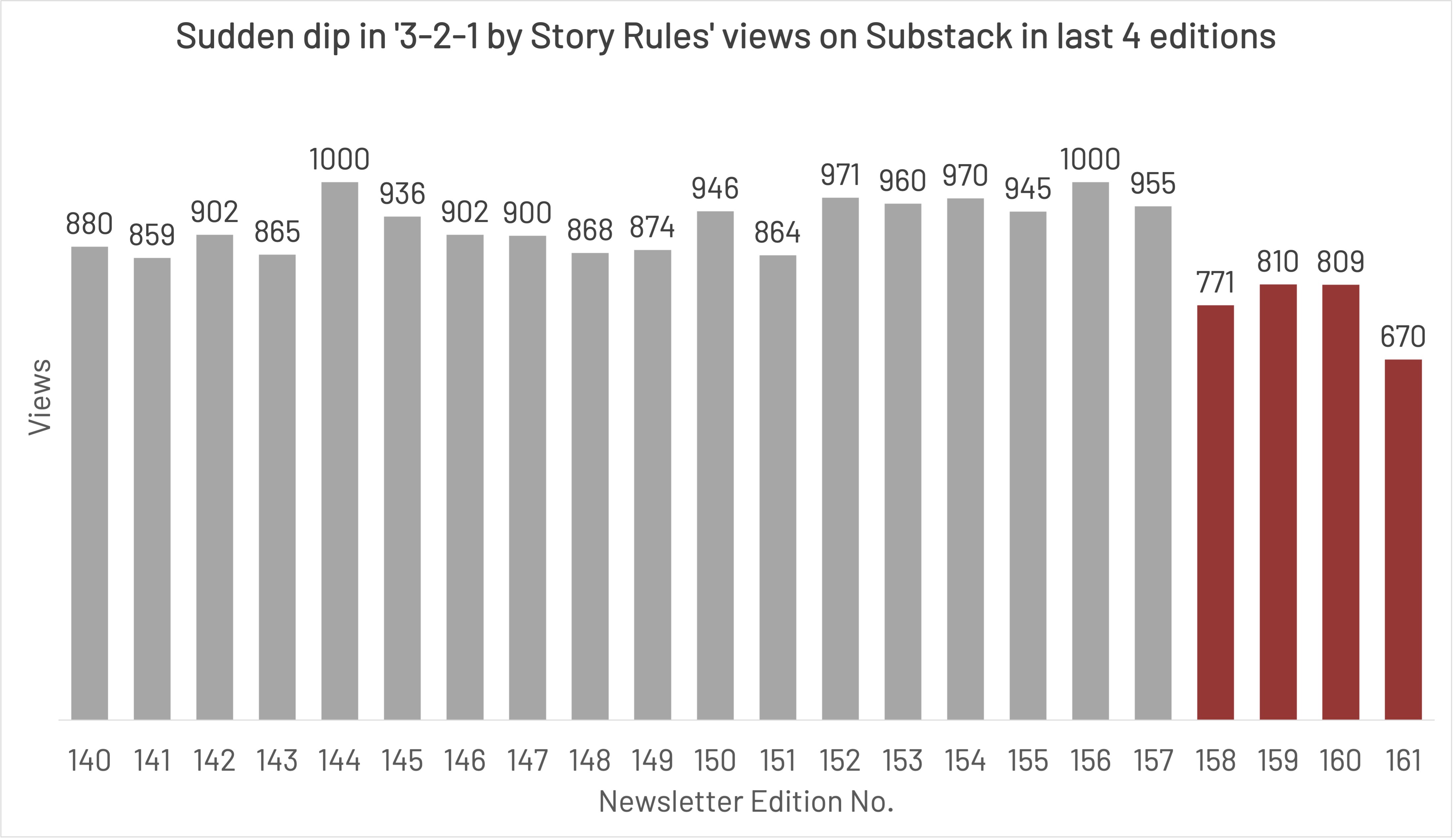
I am not able to understand why. I don’t think it’s to do with the themes, specific content pieces or the nature of my comments. They have been similar to the ones in the past.
Why is this decline happening then? I would love to know if you have a point of view.
And now, on to the newsletter.
Thanks for reading The Story Rules Newsletter! Subscribe for free to receive new posts and support my work.
Welcome to the one hundred and sixty-second edition of ‘3-2-1 by Story Rules‘.
A newsletter recommending good examples of storytelling across:
- 3 tweets
- 2 articles, and
- 1 long-form content piece
Let’s dive in.
𝕏 3 Tweets of the week
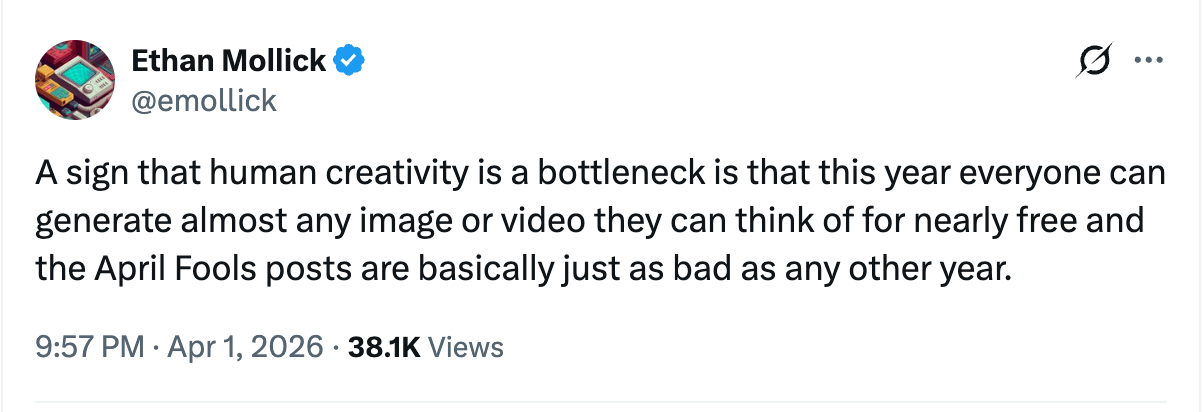
Haha, good observation.
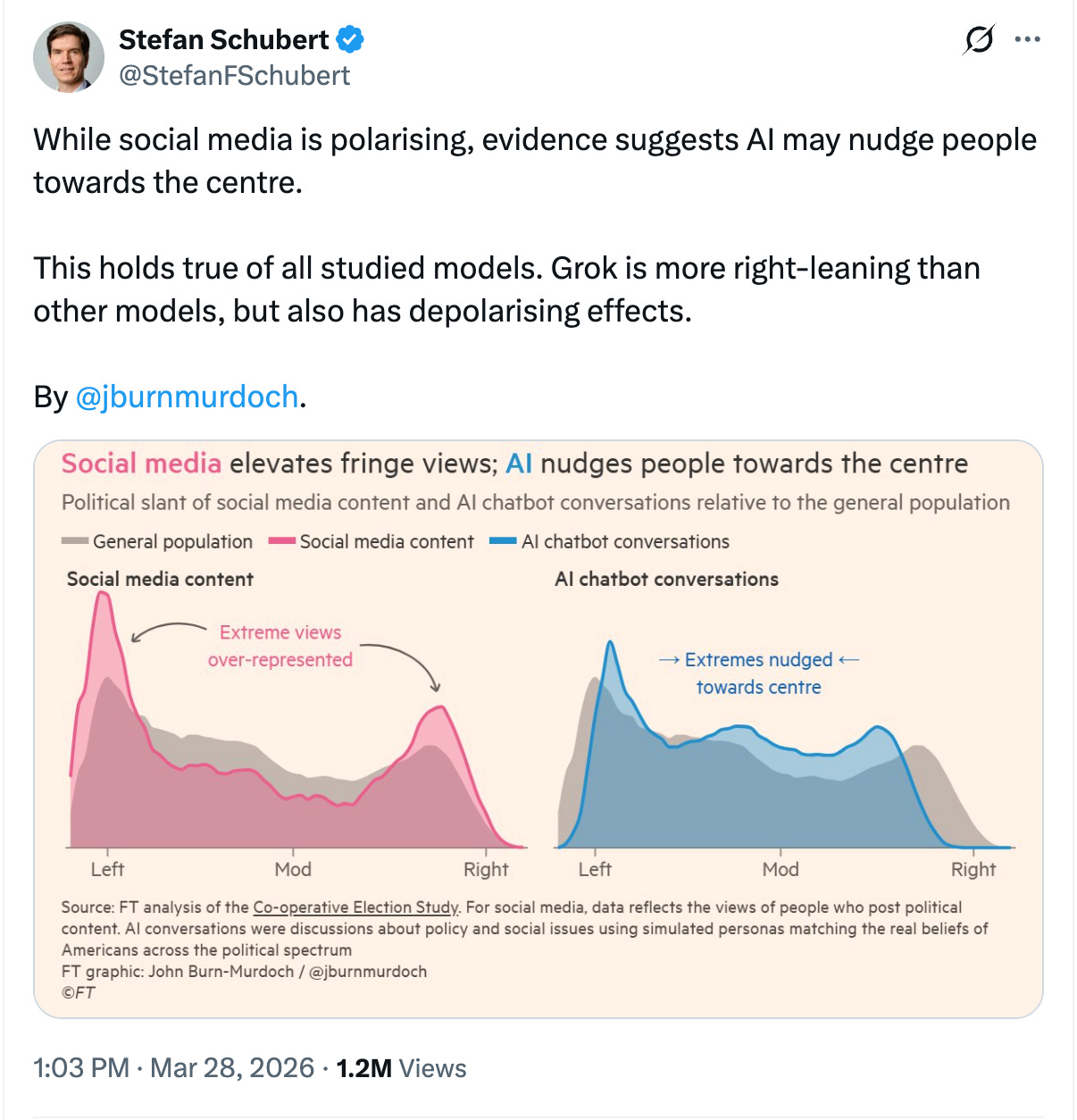
Interesting contrast between the 2 major technologies of our age.
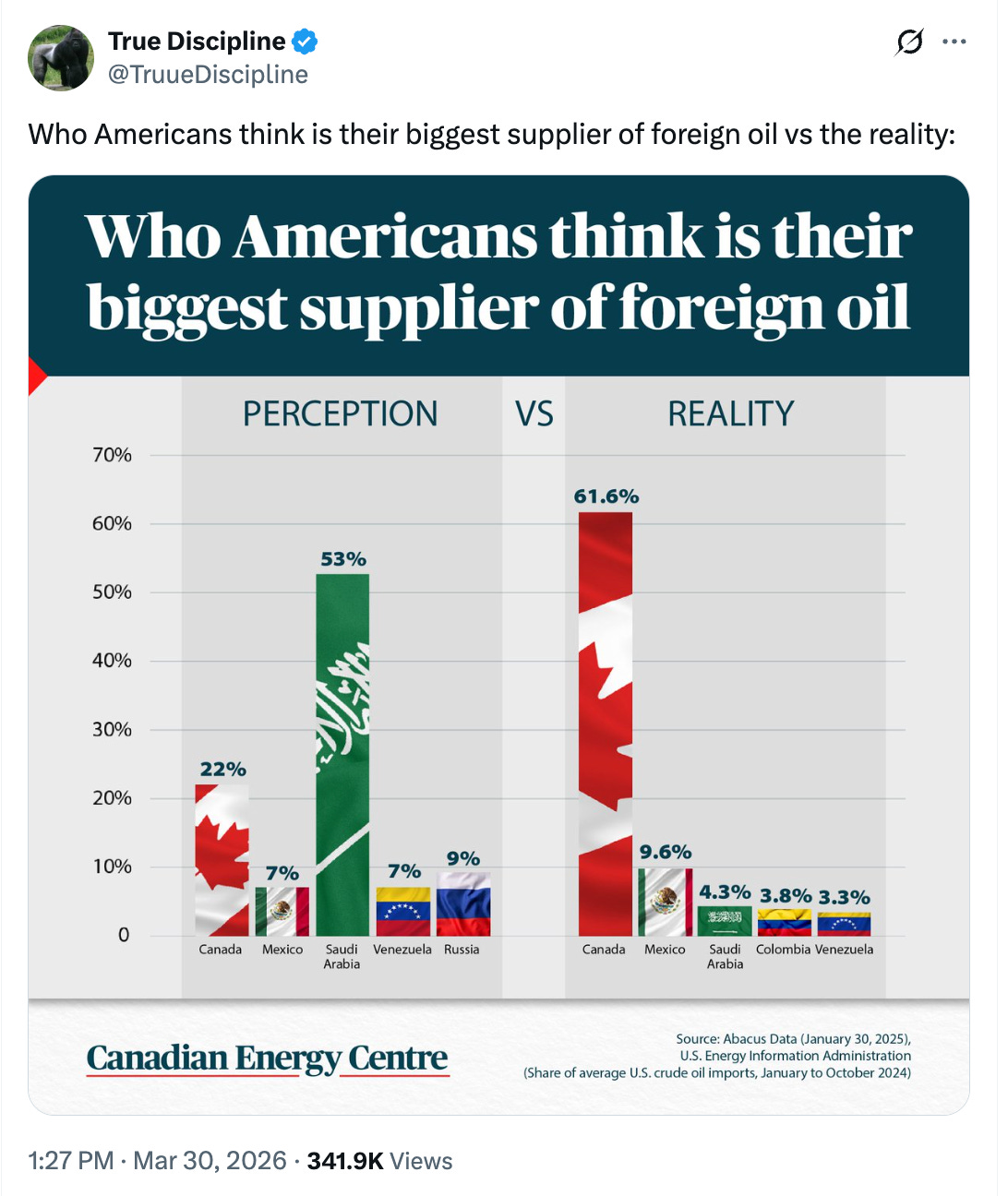
That’s a fascinating comparison!
📄 2 Articles of the week
a. ‘Boy monster: the making of Vaibhav Sooryavanshi’ by Shashank Kishore (ESPNCricinfo)
This is an eye-opening look at the Vaibhav Sooryavanshi story.
Such a lovely tale of a 14-year-old’s love for sweets…:
We had politely told him sweets were completely off his plate, but he used to call and say, ‘Sir, can I have one piece?’ And we used to give in and tell him, ‘Okay, you can have one.’
“A few months later when we were in Mumbai for the Under-23s, Musheer Khan [the young Mumbai allrounder], came to me and said, ‘You’re Ashok sir, right? Are you the one Vaibhav takes permission from when he wants to eat sweets?’ I said yes. Then he’s like, ‘Sir, I’ll tell you one thing. Before he took your permission, he’d already eaten seven or eight pieces.’ And he was taking permission for one.”
… and the sacrifices that need to be made:
But once the realisation kicked in that he had to cut down on carbs and sweets to improve his fitness, Sooryavanshi did what he needed to. It is a pattern those around him have seen: the ability to course-correct, quickly and without fuss. The awareness he has showed about his diet has been in evidence elsewhere, too.
It’s good to have a platform like India Data which is now putting out simple data stories like this.
This piece does a deep dive into the (surely inadequate) official statistics around road accidents in India:
Even by official recorded numbers, India reports the highest number of road accident deaths of any country in the world[3] and accounts for 11% of the world’s road accidents.[4]
Well, given that India accounts for more than 17% of the world’s population, we would also be a high share of accident deaths, I presume…? (although not sure about vehicles).
This is interesting:
The number of fatalities relative to India’s population has been steadily rising, going from around eight deaths annually for every 100,000 people in 2000, to 12 deaths for every 100,000 people by 2022.
Road accident fatalities are also examined relative to a country’s vehicle density. Relative to the number of vehicles in India, fatalities have been on the decline.[7]
People riding 2-wheelers without helmets are a key cause of deaths. A key implication? Make helmets compulsory (based on these two stats):
…nearly half of all deaths in road accidents are of people on two-wheelers
In about 50,000 of the 75,000 fatalities involving two-wheelers, the victims were not wearing helmets.
🎧 1 long-form listen of the week
a. ‘Is AI Coming for Your Job?’ Debate on the Open to Debate podcast
Note: I have used AI (Claude Cowork) to create the first draft of this part of the newsletter. I shared the transcript and the themes that I had found interesting, and it pulled out the relevant verbatim portions and cleaned them up for me. The comments are mine (with AI inputs).
This formal debate on the impact of AI features 4 highly respected leaders
- Arguing Yes (that ‘AI will make jobs obsolete’):
- Andrew Yang, Founder of the Forward Party, Former Presidential Candidate
- Simon Johnson, Nobel Prize winning Economist and Professor of Entrepreneurship and Head of the Global Economics and Management Group at MIT
- Arguing No (that ‘AI won’t make jobs obsolete’)
- Chris Hughes, Co-Founder of Facebook; Chair of the Economic Security Project; Author of “Marketcrafters”
- Rumman Chowdhury, CEO of Humane Intelligence PBC; Former U.S. Science Envoy for Artificial Intelligence
Andrew Yang opens with a worrisome point—for the first time in American history, the unemployment rate for college grads is the same (or higher) as for non-college grads:
Andrew Yang: For the first time in American history, there is no educational premium in the labor market, as the unemployment rate for recent college graduates is now the same or higher as for non-college graduates. I have talked directly to computer science majors from Stanford, UCLA, other national schools that cannot find jobs and they are driving Ubers to make ends meet. It is not just coders or designers or the millions of customer service personnel. It’s anything with the words ‘research’ or ‘analyst’ in it. Finance, law, consulting.
Chris Hughes counters with the famous ATM example—and how the number of tellers has actually increased:
Chris Hughes: In the summer of 1967, Barclay’s Bank installed the world’s first automated teller machine. The press called it a robot cashier. But within days, something funny started to happen. The machine’s keypad got bizarrely sticky. The bank tellers were sneaking out on their break and smothering it with honey. They were terrified. The machine could do in seconds what took them minutes, and their jobs were surely toast. But here’s the thing. In the United States, in 1970, there were 300,000 bank tellers. 40 years later, after the installation of countless ATMs, there were 600,000 bank tellers. ATMs made branches cheaper to operate, so banks opened more of them.
Simon Johnson’s core argument is that CEOs are obsessed with eliminating headcount:
Simon Johnson: There is a dangerous obsession sweeping America and sweeping American corporate life – and it’s actually outside of the United States as well – and that is the obsession of Chief Executive Officers with automation. I ran a class at MIT yesterday with a good friend of mine, Piero Nolli, who is the chair of the supervisory board of Euronext, runs some of the largest stock markets in Europe, and his conversations with CEOs are exactly along the same lines as Andrew described to you a moment ago – the CEOs are thinking primarily about how not to hire.
Chris Hughes makes the argument that given the infinite nature of human desires, new jobs will always emerge:
Chris Hughes: Work will endure because human desires are, in fact, infinite. Every time we develop a new technology which makes it more efficient for us to satisfy some desire, it opens up space for time, money, labor, and attention to shift toward the satisfaction of other desires. That creates new jobs. When the cost of creating something falls, people often don’t want less of it. They want more of it. Excel automated the spreadsheet and the number of accountants went up because businesses wanted more financial analysis.
Did you know that Anthropic is hiring… more engineers:
Chris Hughes: Anthropic claims that 90% of its code this year will be written by AI. And guess what? They’re hiring more software developers to build more products and more features.
Fascinating stat by Hughes on the sheer number of new roles created post 1940:
Chris Hughes: Today, 60% of the people employed in the United States work in jobs that didn’t exist in 1940. Think about if you told someone in 1940 how many Americans would be employed as physical therapists, drone operators, or podcasters. They would think that you were crazy.
Rumman Chowdhury uses a vivid metaphor to bring the focus on trying to solve what’s in our control:
Rumman Chowdhury: Will AI make work obsolete? No – simply because the tech we are building and the world we live in does not support that claim. In addition, this claim is not only distracting, it is harmful from the harms that actually have been articulated quite well today. It’s as if we’re waiting for a volcano to explode and we’re ignoring the house that’s on fire right now.
This debate was held in front of a live audience who were asked to vote on the motion. Did the debaters sway them? Not much at all.
… we asked you to vote before you heard the arguments. We asked you to vote again after we heard the argument. We’re looking for what the swing was on people who went from yes to no to undecided.
Before the vote on the question, will AI make work obsolete? 20% said yes. 62.7% said No. 17.3% were undecided. After the vote, 21.81% said yes. 62.7% said no. 15.6% were undecided. We didn’t move the (audience) by (more than) a hair. The yes side was (marginally) more persuasive. Congratulations to them.re undecided. We didn’t move the (audience) by (more than) a hair. The yes side was (marginally) more persuasive. Congratulations to them.
That’s all from this week’s edition.
Photo by Diana Polekhina on Unsplash