How AI signals a return to oral communication

On 2nd March, I completed 10 years as a storytelling coach and wrote a post about it. I’ve also shared a link to a Google Form for people who are interested in exploring a solopreneur life for themselves. Here’s the link.
I also shared a post about Sir Ken Robinson (whose birth anniversary was on 4-March) and some hilarious lines from his TED talk (the most-watched ever).
And now, on to the newsletter.
Thanks for reading The Story Rules Newsletter! Subscribe for free to receive new posts and support my work.
Welcome to the one hundred and fifty-eighth edition of ‘3-2-1 by Story Rules‘.
A newsletter recommending good examples of storytelling across:
- 3 tweets
- 2 articles, and
- 1 long-form content piece
Let’s dive in.
𝕏 3 Tweets of the week
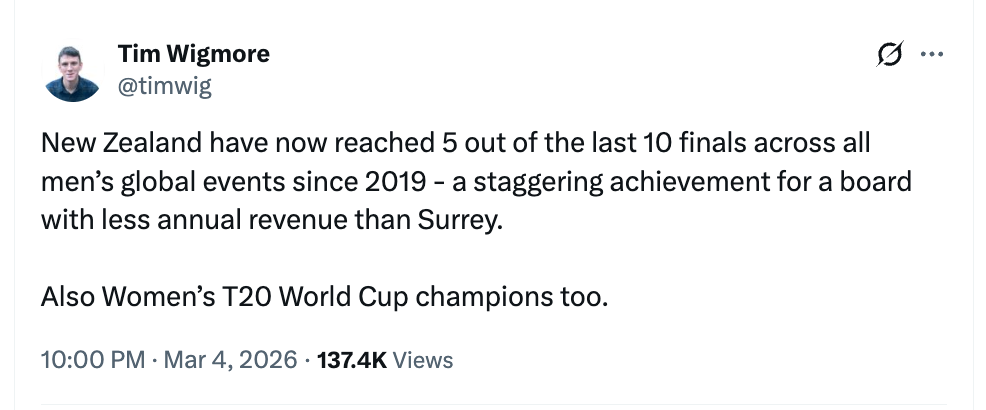
Great observation. Less annual revenue than Surrey, less population than Pune, and with cricket not being the most popular sport. Remarkable achievement.
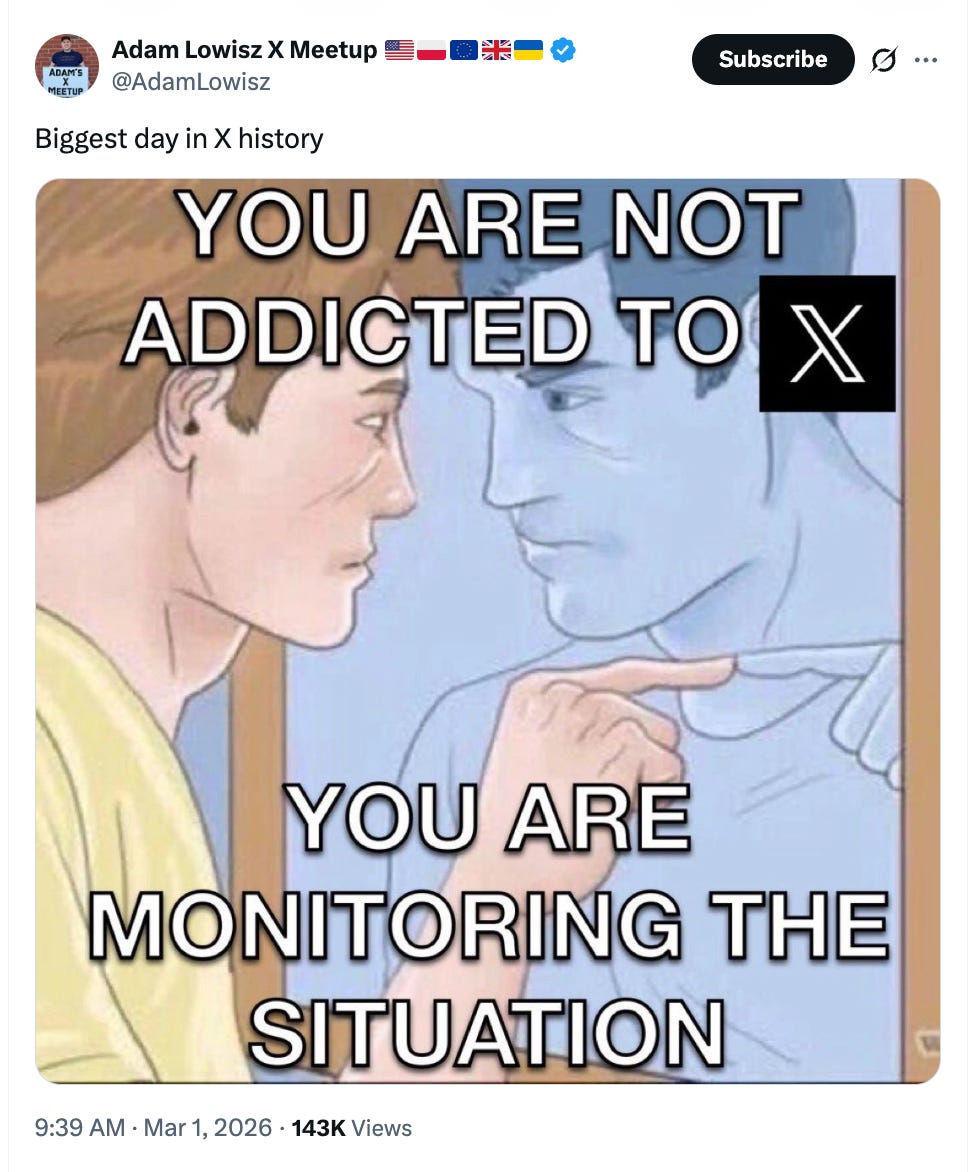
Hahaha, ouch!
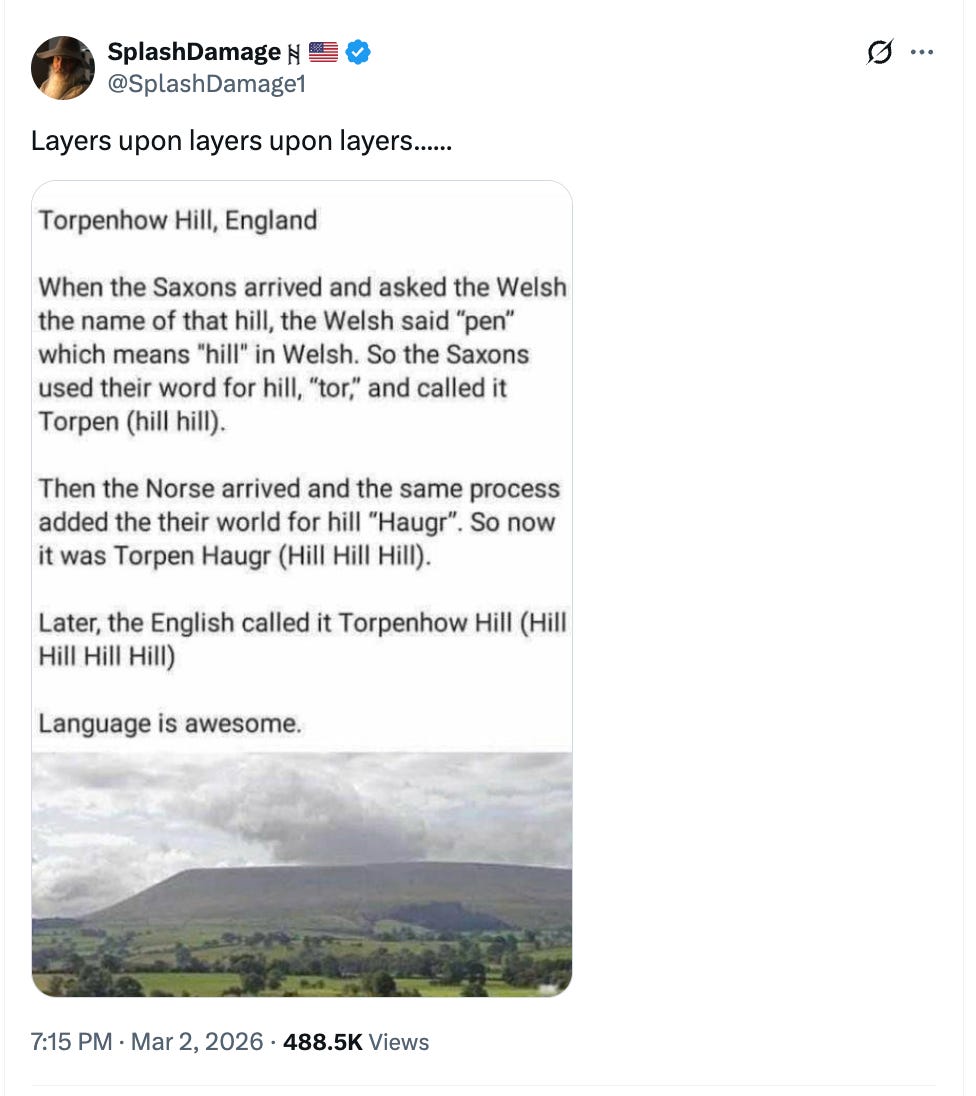
Fascinating example of naming.
📄 2 Articles of the week
a. ‘Which of these 9 Product x Market Type Categories is your Startup in?’ by Sajith Pai
India’s premier VC thought-leader Sajith Pai shares a must-read piece for startups on the 9 different startup categories based on Product and Market type.
He starts with a clear example of how a startup found product-market fit with the most basic of MVPs:
“After hearing a strong desire for a “SOC 2 easy button” solution, Vanta’s founders built a zero-code MVP (a spreadsheet) to test with potential customers and determine whether SOC 2 preparation was actually productizable. Christina shared this MVP with friends, former coworkers, and people in their networks at companies ranging from two-person startups to multi-thousand-person enterprises to gauge their reactions. She knew they were onto something when she got a call from a friend out of the blue saying, “I heard you’re doing SOC 2. We should get a drink, and also can you do that for my company?” As more people proactively reached out to ask about what she was building, she got a real sense of market pull, which led to growing confidence.” – Todd Jackson, How to validate your startup idea
He then contrasts it with another startup which took 3 years to code the product.
Why the difference? Because of Sajith’s core insight:
… one logical reason a startup needs to build a comprehensive product, and not just a barebones MVP (Minimum Viable Product), to launch, has to do with the extent of competition there is in the market it is launching into. For Linear to launch in a market which has an existing incumbent like Jira, it clearly has to ensure that it is competitive with Jira. You can’t launch with a barebones product; you do have to have a product that matches what the incumbent has, or at least matches many of the default features the incumbent has, not to mention being 10x better than the incumbent on some features.
Sajith then introduces his framework, which has clearly emerged after some high-quality thought:
These two dimensions or axes:
a) the extent of competition, that is, whether you are operating in a Blue Ocean without competition, or a Red Ocean with existing incumbent(s), or even something in the middle, which we can call an Orange Ocean where you may not have a direct competitor but there are indirect competitors; and
b), whether your product is Vitamin, Toothpick or Painkiller;
combine to create a matrix of market by product type and determine the extent of product development that you need to do to launch in the market. First, an illustration of the nine categories emerging from the 3 x 3 grid of product type x market type.
Here’s the image of his framework:

Read the full article to understand it better.
b. ‘We don’t need to just make up fantasy stories’ by Brian Albrect
The Citrini piece seems to have spawned a LOT of response pieces. This one by an economist caught my eye.
I love the conversational writing style – check this portion out:
Right at the start, Citrini introduces a concept called “Ghost GDP”: output that “shows up in the national accounts but never circulates through the real economy.”
Ummm… yea, that’s not a thing.
GDP is not a number someone estimates and hopes is roughly right. I mean they do estimate it, but that’s not what matters here. It’s an accounting identity. Every dollar of output is, by definition, a dollar of income to someone.
Albrecht points out contradictions in the Citrini piece:
The essay needs the consumer economy to collapse and the investment economy to boom at the same time. It never reconciles the tension because it can’t. You cannot have GDP going up while every component of spending is going down. The identity won’t let you. As Steinberg puts it, “it only makes sense to invest in AI if there is income to buy the things the AI is generating.”
More logical fallacies highlighted:
Citrini’s scenario freezes the economy at step one. Companies cut workers. Workers lose income. Spending falls. Recession. Full stop. They never ask what happens to the price of the services those workers used to provide, or what happens to demand when intelligence gets radically cheaper. It’s a simple point, but people forget one side of the market all the time. Citrini forgot the demand side entirely.
The last line in this para – hilarious:
Even granting Citrini’s claim that white-collar workers are 50% of employment, the other 50% — healthcare, construction, government — operates on entirely different timescales. A hospital can’t replace nurses over a mid-year budget review. I just had a converation with someone in healthcare that was talking about the new tech of SHAREPOINT!
As per Albrecht, it’s all about price theory:
As Josh put it, price theory is the antidote to bad arguments. It was the antidote during Covid. It was the antidote for trade deficits. It is the antidote now. It will be the antidote next time.
🎧 1 long-form listen of the week
a. The Media Theory That Explains “99% of Everything” | Plain English
This is a fascinating conversation between Derek Thompson (Plain English podcast) and Joe Weisenthal (Bloomberg) about one of the biggest shifts happening in human communication: the move from a literate culture back to an oral one.
Thompson starts by talking about how the written word fundamentally changed the way humans think. Writing ‘fixes language’ in place:
Once ideas can be fixed on a page, weird things can start happening. You can build longer, more complicated arguments. You can compare claims across time. You can store a complex idea that can’t be memorised and then add more complex ideas over that, stacking abstraction over abstraction.
Weisenthal’s big thesis? That human communication is becoming more oral. Not just that people are talking more with their mouths – but that communication in general, particularly online, has the characteristics of conversation: the back-and-forth nature, the one-upmanship, the need to be funny and snappy…
One of the most striking ideas in the conversation is the contrast between the eye and the ear:
So, it’s like you go into a room and you can like stand back at the corner so you can like make sure that you can see everything going on in the room. The ear is like very different. We’re like at the center. We’re at the center of everything constantly. You can’t close it. The ear continues to work while we’re sleeping. It’s like it’s an evolutionary purpose for the fact that like we can still hear when we’re sleeping because if there’s an intruder or you know a wild animal or something, it wakes us up and we can run
Weisenthal extends this to the internet: even though we ‘look’ at the internet, our experience of it is more like hearing – we’re enveloped, immersed, unable to step back.
… even though we do look at the internet there is this sense in which we can never remove ourselves from it it even if we’re reading the internet it almost feels more like we’re hearing in it there’s like an immersiveness in contemporary digital discourse that I think is much more like hearing than it is about uh than it is about seeing.
As Thompson puts it:
A book is an eye and the internet is an ear.
The conversation then talks about the ‘future of history’.
In the past, in oral cultures, history was malleable:
in a lot of oral cultures history was malleable… throughout in oral culture where when something is no longer convenient, maybe there’s some lineage of kings and that king falls into disrepute and they switch it, they’ll just rewrite, they’ll just come up with a new poem. And so there isn’t, you know, the idea of like a fixed history is sort of like a modern literate thing
Weisenthal argues we’re heading back to that world:
The future of history is: if there’s some aspect of history that we find to be inconvenient, we’ll just hallucinate a superior history that validates the contemporary mood… it’ll look more like the oral histories, which are malleable to the conditions of the time.
Thompson observes that everything seems to be converging towards short-form video. Podcasts are becoming TV. Social media is becoming TV.
It’s as if short-form video is the attractor state of all media. We’ve reached the Fukuyama end of communications history – short-form video.
The most thought-provoking part of the conversation, for me, is about AI. Thompson quotes Ong’s observation that a written text is fundamentally unresponsive – you can ask it a question and get back nothing except the same words. But AI has changed that. We can now have a conversation with text.
AI sits at this really interesting intersection – we’re having an oral conversation with a piece of text. And it’s weird… that is a weird new alien way to interact with media.
A deep, thought-provoking conversation. Highly recommend giving it a listen!
That’s all from this week’s edition.
Photo by Diana Polekhina on Unsplash