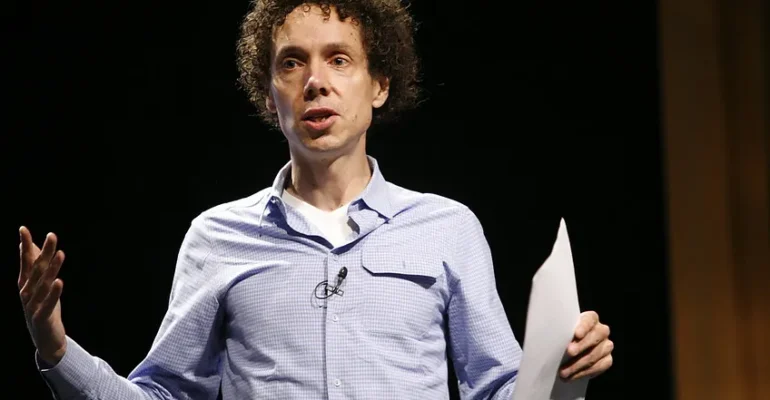
Gladwell—the OG nonfiction Storyteller
It’s busy time—this week I was in sessions all five days, and the next couple of weeks are quite crazy busy too.
The book editing process has unfortunately slowed down, but I have taken an extension on the deadline!
Btw, I saw and quite liked Gazab Raat on Netflix. See it if you get the chance.
Thanks for reading The Story Rules Newsletter! Subscribe for free to receive new posts and support my work.
Welcome to the one hundred and ninety-fifth edition of ‘3-to-1 by Story Rules‘.
A newsletter recommending good examples of storytelling across:
- 3 tweets, and
- 1 long-form content piece
Let’s dive in.
𝕏 3 Tweets of the week
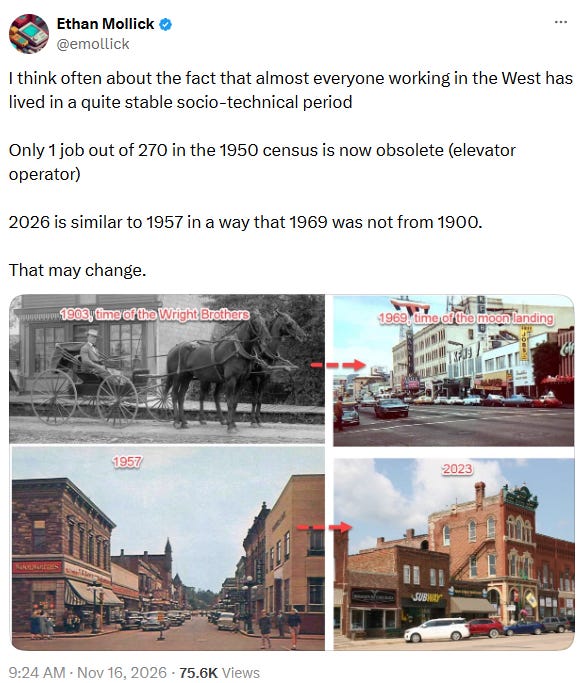
Insightful—great use of norm-variance.
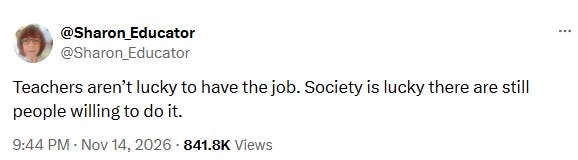
So true
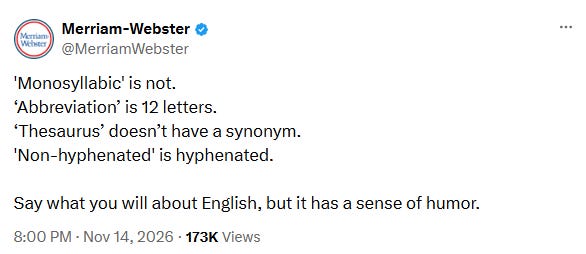
Haha, great observations
📄 1 long-form read of the week
a. How I Write: Malcolm Gladwell on Telling a Story
When the OG Malcolm Gladwell came on the How I Write podcast, I knew it would be a special one. It did not disappoint. It features some great thoughts on the writing process by the maestro.
Gladwell compares writing to assembling a jigsaw puzzle and connects it with our sense of direction:
Gladwell: That’s the pleasure of it. It’s assembling pieces. Some pieces come from you. Some pieces you collect. Some pieces you had in the back of your head for a while. And you have to arrange them in your mind on the page.
When I’m deep in writing I have very often had this sensation that when I get up and go outside, I don’t know where I am. I’ve thought about this a lot, and I think it’s because I am using exactly the same part of my brain for writing as I do to make sense of direction. In order to know where you’re going, you have to have visualised in your mind a series of steps that lead somewhere. And I’ve so exhausted that particular module of my brain in writing that when I go outside and have to do it again, even in a more trivial way, I can’t do it. It takes me two minutes and then suddenly I realise where I am.
Experts are better because they have bigger ‘chunks’ than novices:
Gladwell: That neurological notion of chunking – I think you come to an understanding of what your chunk is. In classic chunking, the expert is someone whose chunk is larger than everybody else’s. The great basketball point guard – his chunk is the whole court simultaneously, everyone on the court all at once. He can look at it and make sense of the whole thing. The eight-year-old playing basketball, his chunk is the guy in front of him.
So I do think that as a writer you come to understand what your chunk is, and how much information I can make sense of in a given period. I very clearly always know when I’m done for the day, and where I’m into steep diminishing returns – because I realise, oh, I’ve exceeded my maximum.
Specificity is super important in storytelling:
Gladwell: I’ve always been fascinated in storytelling by specificity. When I think about what makes somebody interesting or funny, it is almost always that they have a particular talent for bringing specificity to what they’re articulating.
The comic Demetri Martin has this joke which I think about every single day. The setup was he was thinking of phrases that have their meaning altered by the addition of the minimum number of words. And one of his best examples was the sign in a restaurant bathroom – ‘Employees must wash hands before returning to work.’ And the words he added were: ‘especially Earl.’
It’s one of the greatest literary jokes of all time, and it’s great because immediately you imagine who Earl is. In an instant you know Earl. And also, suddenly, the notion of staying in that restaurant becomes impossible – you have to leave.
That specificity – you’re not specific because you’re smarter than anyone else, or even necessarily more informed than anyone else. It’s just if you’re more interesting than anyone else. It’s the thing that makes you interesting. Part of what makes eavesdropping on a conversation so much fun is how much specificity there is. You have no context. Nothing being said is of any relevance to you, but you listen because you’re attracted to the specificity of it. ‘And then she called me and this is what she said’ – you’re riveted by that.
The writer should always be aware that the reader can leave:
Gladwell: I’m an old newspaper man. If you’re a newspaper person, you’re aware that your reader will leave you. You have a sense of fatalism about that. They’ll leave you before it’s over. So you’re constantly in a state of anxiety about keeping them for as long as you can.
Gladwell’s stories are interesting, but there’s a LOT of effort to get to the ‘good parts’. He narrates how it took him 12 hours of interviewing to get something interesting from someone:
Gladwell: The (interview) I’m doing now, I figured out why I was doing it probably in hour 12. It’s a guy who’s an ICU doctor. I’d used him on another story, thought he was an interesting guy, proposed that we just talk. Had zero feeling about where I was going to head.
In hour 12 he tells me he testified in a lawsuit in a murder case. I said, ‘Oh, tell me about that.’ And he goes: ‘The prosecution called 50 expert witnesses. The defence called one. I was that one witness, and we won.’ And I was like – oh, there we are. That’s it. That’s it, baby. And then I just went back and thought, okay, I know what I want now.
Writers have an obligation to give an overarching structure/a frame for their audience (I could NOT agree more):
Gladwell: I think you have an obligation, if you do my kind of writing, to give people tools to organise their experience. Things are much more powerful if I give you a kind of overarching why. It’s not just a way of making sense of the world, it’s also a way of retaining the information.
So if you’re nervous about your listener or reader abandoning you, then I think you try harder to give them something to hold on to – a place to file the information you’re giving them. That superstructure is a crucial part of ensuring you’re heard.
Gladwell’s advice—delay your conclusion in any interaction:
Gladwell: If you just delay your conclusion in an interaction, you’re so much better off. You’re talking to someone and they seem distant and hostile. Your normal reaction is to take offence. Just delay it. And what you find out invariably is that something terrible has happened in their life. It’s got nothing to do with you. The penalties associated with premature conclusions are just so large – you invariably end up being defensive and protecting something.
His learning from songwriters—economy of expression:
Gladwell: (On his learning from songwriters) Just the economy of expression. It’s the same reason, on a more extreme level, why I’m so fascinated with ads – because the economy is extreme in that instance. I’ve got 30 seconds, or I have a minute, and the idea that you could do something meaningful in that time is to my mind fantastic. The constraints.
That’s all from this week’s edition.
Photo by Diana Polekhina on Unsplash