How to Manage Our Emotions Better
(Apologies for the delay in posting this week—my bad!)
This was a busy week, with five days of training—Monday to Friday. My book writing took a backseat… (but my bank account is smiling!)
All five days were in Bangalore, and yes, you’ll be happy to know that I did my bit to contribute to BLR’s microbrewery economy!
Oh, also, Jailer 2 has been released! But alas, I could not watch it on the first day, because of the travel and trainings. The plan is to watch it soon and I will be sharing my thoughts in next week’s newsletter!
Thanks for reading The Story Rules Newsletter! Subscribe for free to receive new posts and support my work.
Welcome to the one hundred ninetieth edition of ‘3-to-1 by Story Rules‘.
A newsletter recommending good examples of storytelling across:
- 3 tweets, and
- 1 long-form content piece
Let’s dive in.
𝕏 3 Tweets of the week
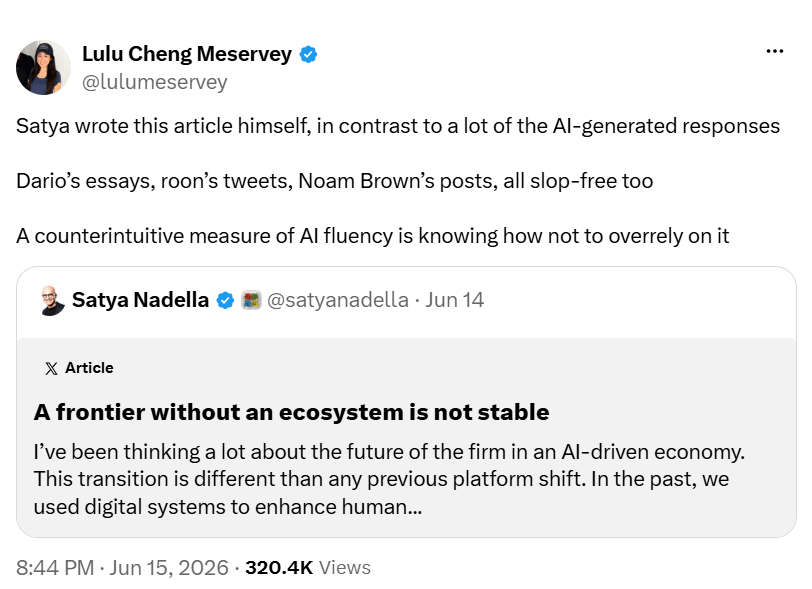
Yes please. Use AI for ideas, but as a leader, please write your key speeches, presentations and posts in your own words.
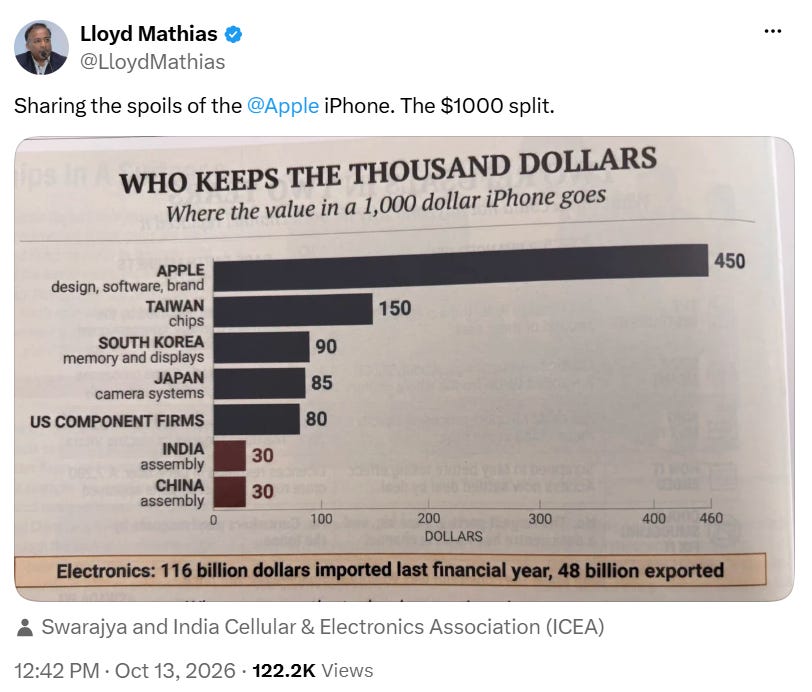
Fascinating. Despite all the hoo-haa, India and China account for just 3% each of the iPhone’s value.
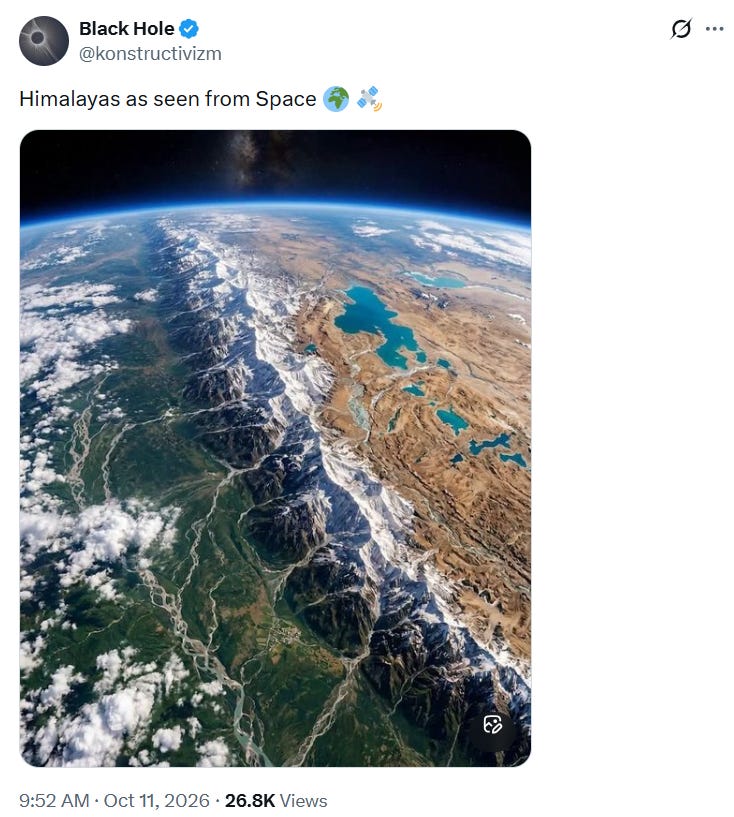
What a fascinating visual! (Do you think it is AI-generated?)
📖 1 long-form listen of the week
Hidden Brain: George Loewenstein – The Enemies of Happiness
In this ‘Hidden Brain’ episode featuring George Loewenstein (yes, the same guy who came up with the ‘gap theory’ of curiosity, which I mention in my book), he talks with Shankar Vedantam about the reasons why humans tend to be unhappy a lot of the time.
Loewenstein is a psychologist at Carnegie Mellon and the author of The Opposite of Happiness: How Bad Feelings Make and Break Us. In this conversation, the key point made is that the main obstacles to happiness aren’t our circumstances but our own emotional responses.
The host opens with a striking quote by Leo Tolstoy from Anna Karenina, about humans’ eternal error:
Vedantam: In his great novel Anna Karenina, Leo Tolstoy spends hundreds of pages describing Count Vronsky’s desperate longing to be with Anna, the woman he loves. He risks his reputation, his military career, his standing in society. He endures uncertainty, jealousy, torment. And finally, after all the struggle and sacrifice, he gets what he wants. Anna is his. But almost immediately, something strange happens. The feeling he imagined would satisfy him forever begins to fade.
Vedantam, quoting Tolstoy: ‘In spite of the complete fulfillment of what he had so long desired, he was not completely happy. He soon felt that the realization of his longing gave him only one grain of the mountain of bliss he had anticipated. That realization showed him the eternal error men make by imagining that happiness consists in the gratification of their wishes.’
Vedantam: Many of us make what Tolstoy called the eternal error. We assume that external circumstances – a better job, more money, the right relationship – will finally make us happy. Or we blame our unhappiness on what’s happening around us and the people in our lives.
The desire for the next big thing has a name: ‘the hedonic treadmill’:
Loewenstein: The hedonic treadmill is the idea that we keep thinking that the next accomplishment, the next goal that we satisfy, the next material object that we crave – if we only get that, if we only accomplish our goal, we will finally achieve the happiness that has been elusive so far. But of course, as soon as we do achieve these goals or obtain these material things, they recede into the background, and new goals emerge, new wants. And so we’re on a treadmill where we always end up in the same place.
In his book, Loewenstein mentions a study in which people hold onto grudges for a long time—and feel miserable thinking about things that happened decades earlier:
Loewenstein: People really bared their soul. It was absolutely remarkable going through their responses. One of the things I noticed was that a lot of the miseries had taken place years or even many decades earlier, and they were still very much alive for the respondents. Another question I asked was, ‘How long did the misery last? Are you still experiencing the misery?’ And an amazing number of people reported that they were still experiencing the misery a decade or many decades after the fact.
That misery is within the power of the sufferer to end:
Loewenstein: In lots of the different stories that I read from the misery survey, it just seemed patently obvious that it was within the respondent’s control to end the misery. For example, there are so many people living with anger – some of them in their 60s or 70s, living with anger that dates back to things that happened to them in their childhood, and they just can’t let it go. And resentments towards ex-spouses, towards colleagues. It would be so beneficial for these people to forgive and forget, and yet they are unable to do that.
I have a paper with a former graduate student named Shireen Chaudhry titled ‘Thanking, Apologizing, Bragging, and Blaming.’ In so many cases, a simple thank you or a simple apology would fix rifts in relationships, and yet people are just unable to get themselves to utter the words. So many of these emotions – if people could just let go, they could move past their misery.
The evolutionary explanation for this? Humans are programmed for survival and reproduction, not happiness:
Vedantam: You and others argue that natural selection has constructed our minds to be survival machines, not happiness machines?
Loewenstein: Well, survival and reproduction machines. Reproduction might be even more important than survival. We’re designed for evolutionary fitness… And happiness and unhappiness are just mechanisms that the brain has evolved to get us to do the things that we need to do to survive and reproduce.
Negative emotions are more effective than positive emotions in getting us to act:
Loewenstein: It turns out that negative emotions are much more effective in getting us to do these things than positive emotions are. And that’s probably the reason why there are so many more negative emotions than there are positive emotions. In a lot of cases, there isn’t even a positive emotion that corresponds to the negative emotion.
Think about something like pride. The inverse of pride is shame. It’s nice to feel proud, but it’s not that strong an emotion, and it’s pretty short-lived. But shame can be extraordinarily miserable. You almost can’t plumb the depths of shame. And shame is very lasting – it can put you in a negative state for weeks, months, years. For every pair of positive and negative emotions, the negative emotion is invariably stronger and more lasting than its positive counterpart.
A nice illustration would be, imagine going to dinner with your significant other at a really nice restaurant, the best food imaginable, and then the waiter comes over and behaves in a high-handed fashion. That’s going to ruin the food.
Some negative emotions—like dread—have no positive counterpart:
Loewenstein: Many negative emotions don’t really have a positive counterpart. For example, dread. Dread is a hugely important negative emotion, and we don’t even have a word in the English language for the positive counterpart. We have to use something like ‘pleasurable anticipation.’ But there’s no word for that. And I think that’s very telling.
Humans have a ‘sociometer’ that drives their self-esteem—based on their perception of what others think of them:
Loewenstein: (Mark) Leary argues that when we were doing our evolving – much of which we actually did before humans existed – we lived in groups, and it was very important for our survival and reproduction to remain part of the group. Being cast out of the group was virtually a death sentence. And when something is so important, we tend to evolve psychological mechanisms to deal with it. Leary postulates that we develop this sociometer. It’s constantly monitoring our world, automatically, always turned on, to see how we’re being valued by the people around us. That’s the sociometer. And that’s what we commonly refer to as self-esteem.
One of his profound insights is that sometimes we think self-esteem is an internal matter – that if only we could develop a high internal sense of self-esteem that didn’t depend on how other people view us. But according to sociometer theory, how other people view us is inextricable from self-esteem. Self-esteem is a measure of how we think the world is evaluating and valuing us.
We often experience emotions about emotions—meta-emotions!
Loewenstein: Let’s say we experience envy towards a friend and we think that’s unacceptable – then we feel guilt that we were experiencing envy. Or suppose a relative dies and we don’t experience grief, then we feel guilt or shame because we didn’t experience grief. These are all meta emotions. They’re kind of like emotions squared. It’s like the emotions aren’t bad enough – we have to flagellate ourselves with the feeling that we aren’t experiencing the right emotions, the emotions that we should be experiencing.
Loewenstein mentions the idea of ‘spirals of silence’—and how by talking about your emotions, you can help others too:
Loewenstein: I have a paper with Cass Sunstein and Erin Carbone titled ‘Spirals of Silence.’ It’s about how when people are embarrassed or ashamed of something, they don’t talk about it. And when people don’t talk about it, you don’t hear about it, and you think it’s rare. And then when you yourself are experiencing it, the fact that it’s so rare makes you embarrassed and ashamed of it, and then you don’t talk about it. It creates what we call a spiral of shame, a spiral of silence. So I think you’re actually doing a public good by sharing your negative emotions.
That’s all from this week’s edition.
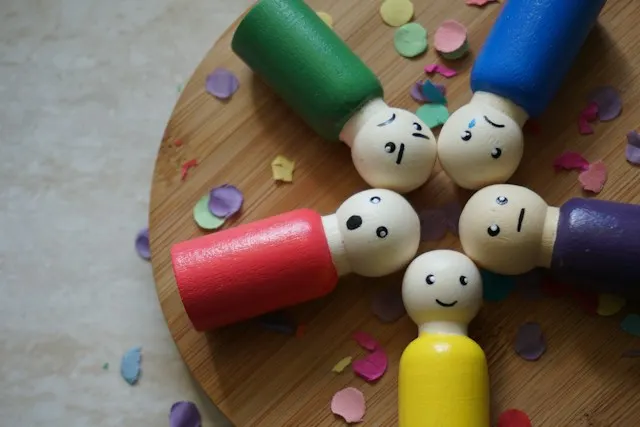
Photo by Diana Polekhina on Unsplash