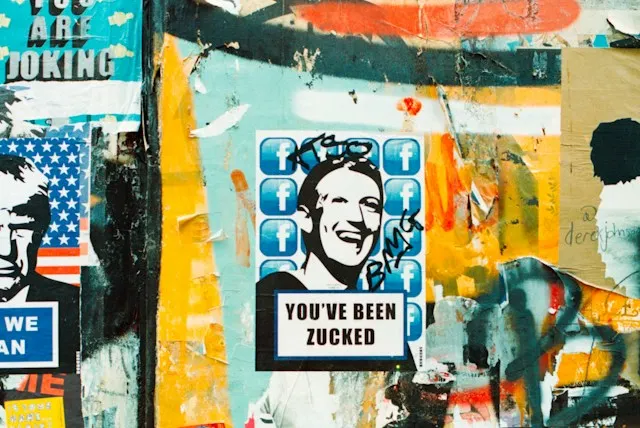
A superb profile of Mark Zuckerberg
Just a few more days until Jailer 2 releases. Can’t wait!
Last week I was using AI to give me inputs on the initial raw drafts of the book. Boy, is it good! Super nuanced and thoughtful pointers—it will take me a long time to work on them and refine the draft… Man, what a crazy world we live in…!
Thanks for reading The Story Rules Newsletter! Subscribe for free to receive new posts and support my work.
Welcome to the one hundred and eighty-ninth edition of ‘3-to-1 by Story Rules‘.
A newsletter recommending good examples of storytelling across:
- 3 tweets, and
- 1 long-form content piece
Let’s dive in.
𝕏 3 Tweets of the week
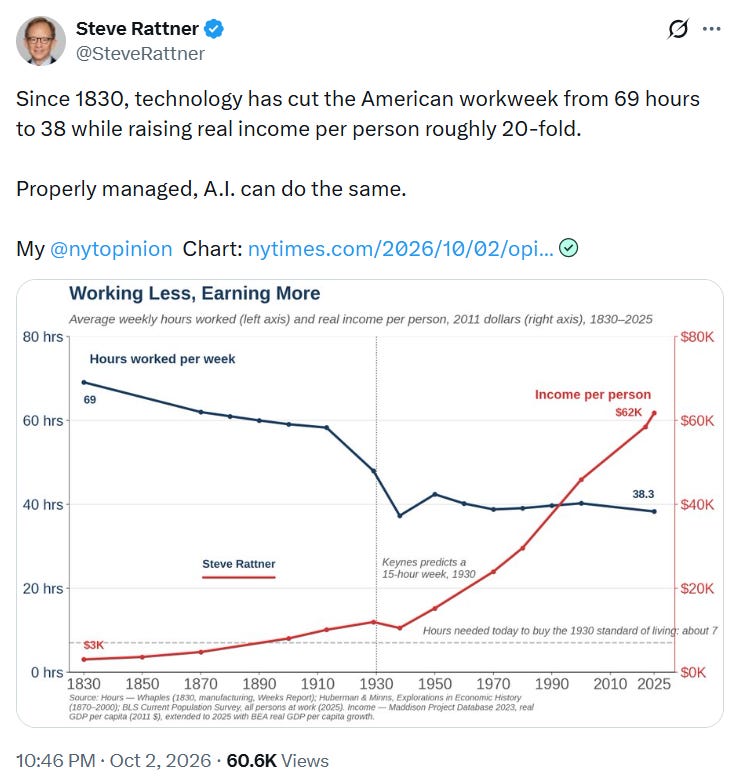
Fascinating – and hope-inducing chart!
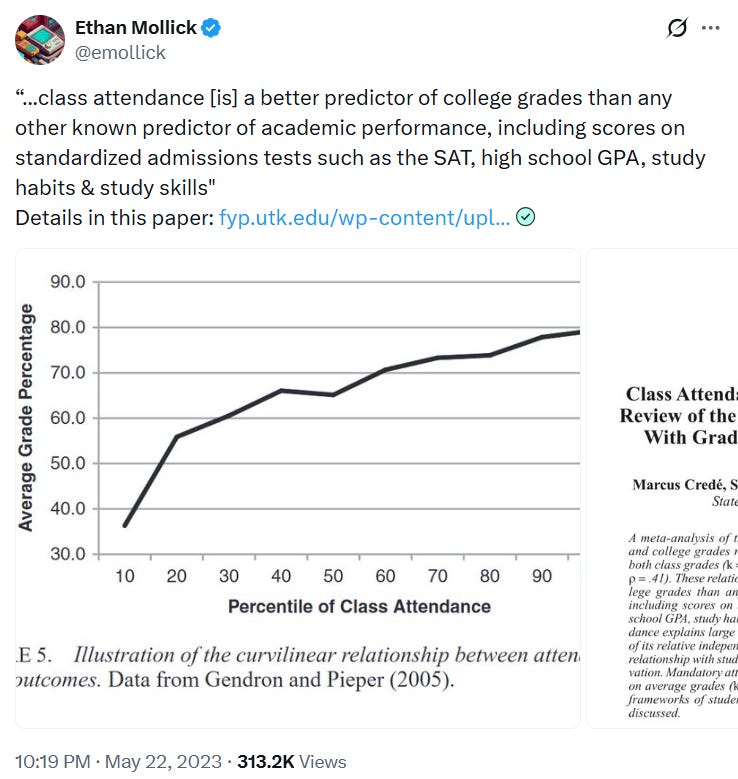
Hear that? You better attend your storytelling workshops when nominated by HR or senior leaders!
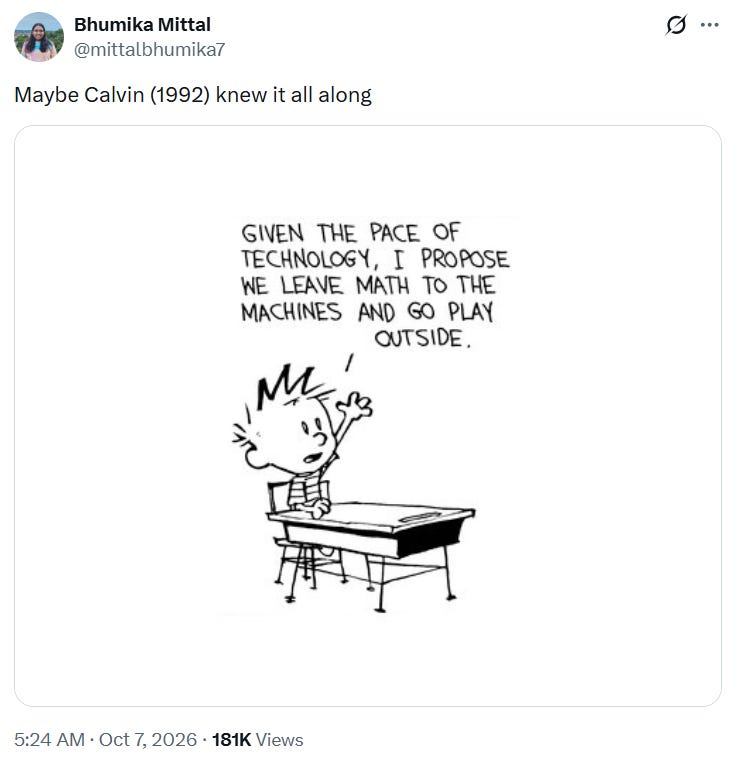
Haha, you can’t go wrong with Calvin!
📖 1 long-form read of the week
a. ‘Mark’ by Jeremy Stern (Colossus)
Is Mark Zuckerberg evil? Or a force of good? The answer (to borrow a Facebook relationship status): It’s complicated.
In this superb long-form profile, writer Jeremy Stern dives into the history of Facebook and provides a nuanced, fascinating profile of its founder, Mark Zuckerberg.
This is a great line to summarise the impact of Zuckerberg:
Zuckerberg—whose unique majority control of Meta’s voting power makes his removal effectively impossible—could in 50 years still be ruler of his empire. Today, that empire has 3.6 billion users, a market capitalization of $1.6 trillion, and has averaged, over nearly a quarter century, the addition of a zero to its valuation roughly once every U.S. presidential term.
Incredibly high levels of ownership:
According to nearly all the three dozen people I interviewed for this story, Zuckerberg is hyperaware of the dilemma’s potential, which is to say paranoid. He is an inveterate micromanager and voracious consumer of data. Aware that any chief’s inner circle is most incentivized to act as courtiers, he frequently engages the direct-reports of his direct-reports, and the subordinates of the reports’ reports. He is known for inviting outside experts and commentators to visit him and argue about his decisions (although he is not known for ever giving an inch). He often accepts personal blame in public for the mistakes of others, perhaps in part because he accepts the reality of Meta, which they accept, too: He is the company, and the company is him.
Can you walk away from a $1 BN offer at age 22?
Much of Zuckerberg’s inner circle consists of people who have been with him for over 15 years, since before Facebook’s IPO in 2012. Some were even around in 2006, when nearly all of Facebook’s management team quit after Zuckerberg, who was only 22, rejected their pleas to take an offer from Yahoo! to buy the company for $1 billion, forever establishing a central tenet of the company’s culture: In the face of opposition, Zuckerberg is right.
Another great line:
The serial underestimation of Zuckerberg as too vulnerable, derivative, or incompetent; of the durability of his core constituencies and sources of advantage; of the undislodgable nature of his personal power; of his grinding unsentimentality about the past; of his desperation to survive; and of his attritional willingness to absorb ridicule and retaliation, is not only an equally apt description of his Roman spirit animal. It is also, perhaps, a better way to understand his attempts to win AI.
You cannot write off Meta…
… since June, Muse Spark has overtaken Google’s Gemini, vaulting Meta back to the frontier pack. It matters little that Muse, now released, was received somewhat ecstatically as perhaps the best consumer AI agent on the market, or that expectations are increasingly giddy for Watermelon, the forthcoming model
Great quote by an ex-Meta employee:
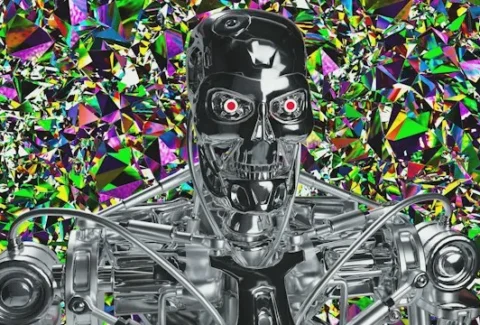
“I’ll be honest, I used to work [at Meta],” a researcher at a competing lab tells me. “They have lots of problems, and there are so, so many ways it could go haywire. But Mark is the fucking Terminator. He’s actually not an asshole, which is interesting. He’s not a miserable fuck. But his source of advantage is he’s never happy. He just doesn’t fucking stop.”
The whole Cambridge Analytica scandal—was it smoke without fire?
The definitive investigation into the scandal—the largest ever undertaken by a data-protection authority—was concluded in October 2020 by the British government’s Information Commissioner’s Office (ICO), which raided Cambridge Analytica’s offices and examined its servers. Its report concluded that the firm’s data had been mostly commercially available and primarily used by the consulting firm as a fabulist marketing device. Regardless, the ICO concluded, the data had not actually been used in the Brexit referendum. At that point—one month before the 2020 US election—the scandal gradually disappeared from the American news media, too.
Interesting perspective on public speaking—even if you aren’t good at it, do you seem authentic?
I note that Musk is not particularly good at speaking in public, but that he is fully himself, which makes him free in a way Zuckerberg is not. All of Musk’s bottomless flaws are right there on the surface for everyone to see, which is why millions of people hate his guts, and also why millions of people get to feel like personal stakeholders in his dreams. Whereas Zuckerberg is an easier mark, Musk’s lack of concealment paradoxically makes him harder to hit. It somehow makes sense that Musk is the man who builds rocket ships to escape Earth, whereas there has always been something dissonant in Zuckerberg as the man who connected billions of individuals in a web of their own self-expression.
That’s all from this week’s edition.
Photo by Diana Polekhina on Unsplash