
#SOTD 17: Weaving stories into your narrative

#SOTD 17: Weaving stories into your narrative
The words story and narrative are often confused with each other.
Here’s how you can make sense of them both. Let’s start with the trickier word: story
‘Story‘ is a tough word to pin down:
– You heard stories from your grandmother
– A moviemaker tells stories on the big screen
– A newsreader will announce the day’s top ‘stories’
– A friend may tell you an hilarious story of how she almost failed her driving test
– And when you present a data-heavy slide, your boss may ask you – “So, what’s the story here?”
Will the real ‘story’ stand up please?
Ok, first things first – in this post, I’m definitely not going to attempt to parse through all these interpretations and make sense of them (topic for another post!).
But one way to simplify things is to make a two way split between fiction and non-fiction. At the workplace, we are not dealing with fiction. We are telling fact-based stories.
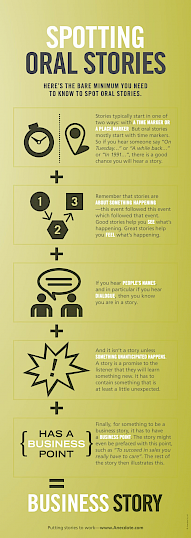
In this context, we can turn to one clear definition of a ‘business story’, articulated by Shawn Callahan and Mark Schenk of the story-coaching firm, ‘Anecdote‘.
As per the Anecdote’s ‘story spotting framework’, a business story has:
– A time and place marker
– A sequence of events
– Humans doing and/or saying something
– A surprising/unanticipated occurrence
– A business point
Alright, so we have one (admittedly narrow) definition of a story.
What is a narrative then?
A narrative is the entire sequence of messages that you craft to get your point across to the audience.
A narrative can have stories (and statements and analogies and numbers and quotes…) as a part of it. The narrative is the pizza; the stories are the mushrooms and sun-dried tomatoes on top.
Great, you say. Can you give me an example that illustrates this, you ask.
You are in luck.
In my recent podcast episode with J Ramanand, we discussed an article he wrote – about how to cope with remote work (this was written when all of us were grappling with managing remote teams during the pandemic).
This post is a lovely case-study of a simple, clear narrative studded with engaging real-life stories.
The post is titled: ‘New to Managing A Remote Team? Three Lessons From Radar, Space, And A Blind Professor To Navigate These Times‘
Read the post. It is short, clear and engaging.
The narrative uses three stories:
– The story of the invention of radar in Britain
– The story of how NASA works with astronauts remotely
– The inspiring story of Prof Hull, and how he coped with his debilitating loss of sight in his 40s
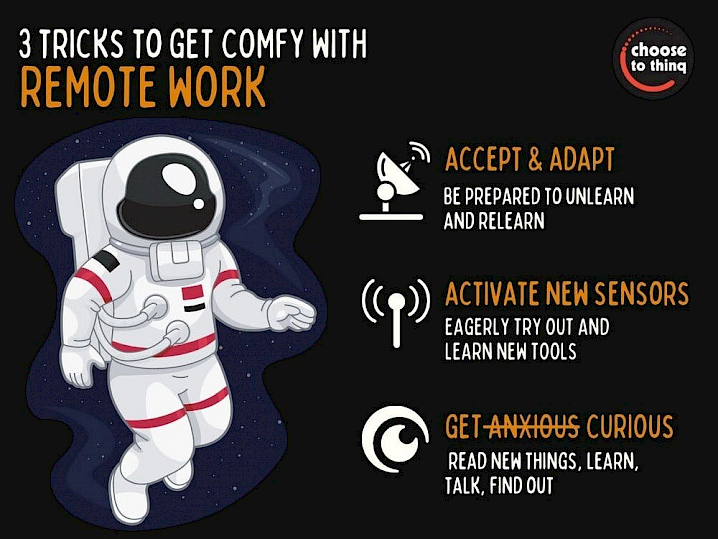
Each story has several nuanced lessons and finally, Ramanand distils three lessons from them:
I love how the stories were woven into the narrative.
A special mention for the ‘cold open’ – Ramanand starts with a war story to grab our attention from the get go!

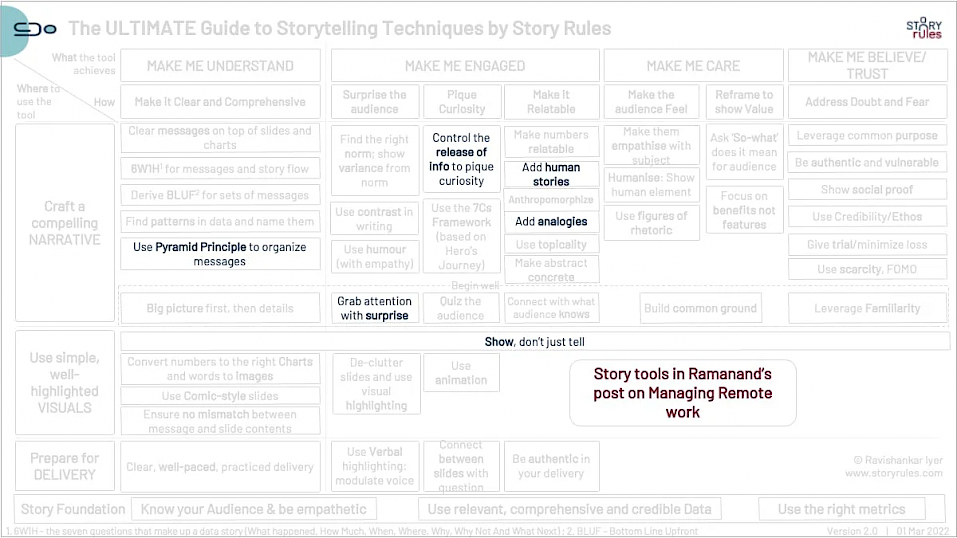
Here are some of the storytelling techniques I spotted in Ramanand’s thought-provoking post:
#SOTD 17