Insights from a Top Speaking Coach

Decent progress on the book. It’s been an interesting journey using Claude as a brainstorming partner. Great for research and some incisive comments on the writing.
The writing is 100% mine, though. Way too much value and joy in that exercise to outsource it.
Thanks for reading The Story Rules Newsletter! Subscribe for free to receive new posts and support my work.
Welcome to the one hundred eighty-second edition of ‘3-to-1 by Story Rules‘.
A newsletter recommending good examples of storytelling across:
- 3 tweets, and
- 1 long-form content piece
Let’s dive in.
𝕏 3 Tweets of the week
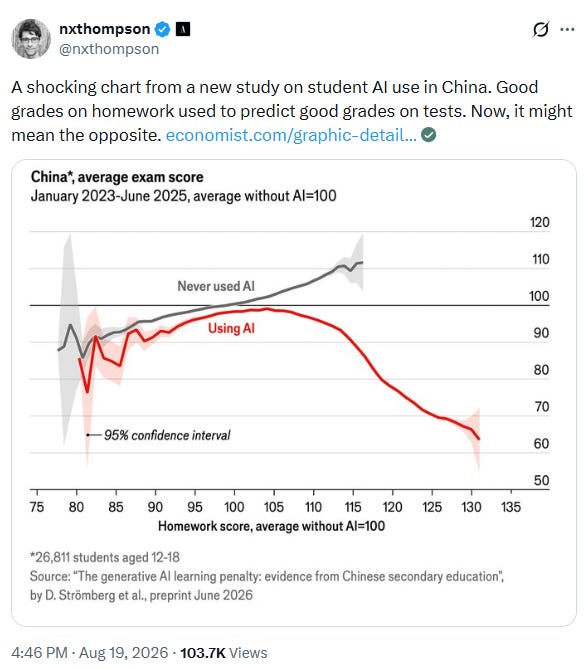
AI might give you good grades for homework, but not for your exams
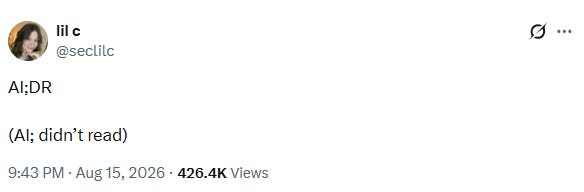
SO true. If I come across a post clearly written by AI, I don’t like to engage with it at all
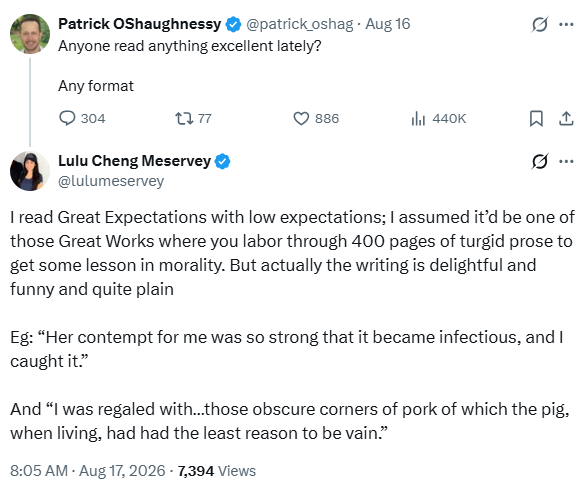
Good reminder to explore the classics.
🎧 1 long-form listen of the week
Mike Pacchione is a speaker coach with significant experience at Duarte (a storied presentation firm based in Silicon Valley).
He has worked with around 75 speakers at Nathan Barry’s Craft + Commerce conference.
In this conversation, he shares some nuanced tips – especially on narrating critical incident stories.
The audience should forget that they are listening to a speech:
Pacchione: What I want more than anything else from a speaker I’ve worked with is that the audience forgets it’s a speech. I want the audience just feeling like – I’m friends with (the speaker). Yes, this is really tight and developed and the timing is great, but I’m friends with him. And if the audience forgets it’s a speech, that’s a win for me.
A good way to calm nerves is to remind yourself that the audience is (generally!) rooting for you:
Pacchione: The greatest gift you can give your audience is to be completely present with them. But the only way that can happen is if – A, you know your stuff, which you should if you’re on the stage, but that’s still knowing the speech itself. B, you know how to calm yourself down. And C, and that’s a big one, you know that the audience is rooting for you.
Mike breaks down every talk to a core message—“If ____, then _____”. That’s a good practice:
Pacchione: I’m always like – fill in the blank for me. If blank, then blank. And there’s always this ‘huh?’, looking up at the ceiling. Every time I ask this, particularly when it’s a really experienced speaker, I’m like, I’m going to sound so stupid. It’s really rare that someone has a good answer. This happens even when someone’s getting paid $50,000 to speak.
The trap we fall into is that the way most people get invited to speak is – here’s the topic. ‘Nathan, I’d like you to talk about email marketing.’ So Nathan could talk about email marketing for eight hours. I’m sure people would take something from that. But if Nathan shows up with a point of view about email marketing, it’s a lot easier for you to focus what you actually want to talk about.
Mike suggests that you should open with an personal story because it builds trust. He then suggests the two types of stories you could choose:
Pacchione: Story is the one I always come back to. The reason is that stories establish who you are. It builds trust immediately. When you build trust, the audience is going to – you can screw up after that, because you won them over. And the other thing it does, particularly if you have nerves, is you’re getting to something easier right away, instead of starting with some bold statement or statistic or trying to posture.
If I had to choose, I’d go one of two directions. It’s either a story where everybody in the audience gets this, everybody’s had this feeling – universally applicable. Or it’s ‘here’s a story that will tell you about who I am,’ and that will inform the rest of the speech. That’s usually better if it’s a failure story. It doesn’t have to be a total screw-up, but just – this shook me to my knees. Because what you’re doing there is creating the transformation that’s going to happen in the speech. A personal story is usually the way to go.
In order to build tension in your story, switch to the present tense, especially when telling the crucial parts:
Pacchione: Every good story should build tension. When you’re telling it to someone else, you want to see them nodding along, or saying out loud, ‘Wait, then what happens? Then what happens?’ An easy way to do that – easy for me to say, harder for people to do – is, particularly for the really important part, switch to present tense.
So – ‘he calls me on the phone and I hear breathing.’ Not ‘I heard breathing.’ Because with ‘I heard breathing’ – Mike is safe. He lives. He’s standing on the stage in front of me. But in present tense, you’re like, I don’t know what happens to Mike. And it’s weird – even though you can see that I’m on the stage and I’m alive, it feels like something bad might happen. So present tense, at least for that really tense part.
Mike uses the analogy of the Pensieve from Harry Potter as a way to extract memories:
Pacchione: The idea in Harry Potter is that you could stick a wand in someone’s brain and extract a memory and allow them to walk through it. That’s what we want when you’re telling a story. So even if it’s as basic as giving the location – I was sitting in my home office, or I was sitting at the dinner table, or I passed this guy in the hallway. Those are allowing the audience to picture what’s happening.
What most people’s instinct is, is just ‘I talked to Nathan.’ And simply by saying ‘we were out to coffee’ – I can set the scene. Yes, I’m there with you. The audience can picture it. That’s what we want.
The flipside is—don’t overdo the detail. Find the right balance—share only those details that matter to the main message:
Pacchione: Detail is a tricky one, because people who are bad at telling stories also use detail. It’s just too much. When I do this as a workshop, I ask people – who’s really bad at telling a story? And someone inevitably says, oh, my uncle. And what does it sound like when your uncle tells a story? ‘Well, he gives you every last detail.’ He’ll be like, ‘Yeah, I woke up that day and I put on argyle socks and I remember I had lemonade and I checked the weather app.’ And as a listener you’re like – that doesn’t matter.
The reason that happens is actually not bad. It happens because the person telling the story is replaying it in their own head. They’re re-experiencing the story, which is actually what you want. You just need to edit it so the audience doesn’t hear every last detail. If you want a rule of thumb – one or two vivid details. It adds credibility and enables the audience to picture what’s happening.
Don’t tell them you’re excited, show them you are excited:
Pacchione: One of my rules for delivery – the audience will follow the emotions that you’re demonstrating. It’s not enough to say ‘I’m excited.’ Lots of people do that. ‘I’m very excited to tell you about this product.’ Oh, you are? I know those are the words you’re saying. There’s obviously a version of this that’s too much – there have been lots of parodies about Apple’s WWDC going too far – but you need to sound excited about the thing you’re launching. Why am I going to be excited about this new product if you’re like, ‘okay, and we’ve got an MCP too’?
Barry: I have actually done that in the past, where in the speaker notes I’ve written in brackets the feeling I’m trying to convey on that slide. Because it’s so important – they’re just mirroring you. Was that funny? Can I laugh? Am I going to be the one person who laughs at something that was not supposed to be funny? Am I supposed to be excited? Am I supposed to be sad? You tell me.
Pacchione: Be the emotion you wish the audience to see – as Gandhi might say.
I loved this concept – the illusion of the first time. Whenever you are delivering a message that you may have delivered multiple times, you have to still give the audience the impression that you are delivering it in a fresh and excited way, not in a jaded way:
Pacchione: Actors call this the illusion of the first time – people on Broadway doing the same show night after night. The illusion of the first time. The part of your brain that first learned about the MCP (a technical term) and you’re like, ‘What? That’s incredible.’ You need to channel that when you’re saying the thing.
So you’re leading the audience like – isn’t this amazing? This thing is going to totally change your business. You don’t need to literally say those words, but that needs to be the feeling that you have.
That’s all from this week’s edition.
Photo by Diana Polekhina on Unsplash