
How to Use AI for Writing
It’s been a good week for the book, and I was at home all five days!
Wrote this post about my favourite part about writing the book.
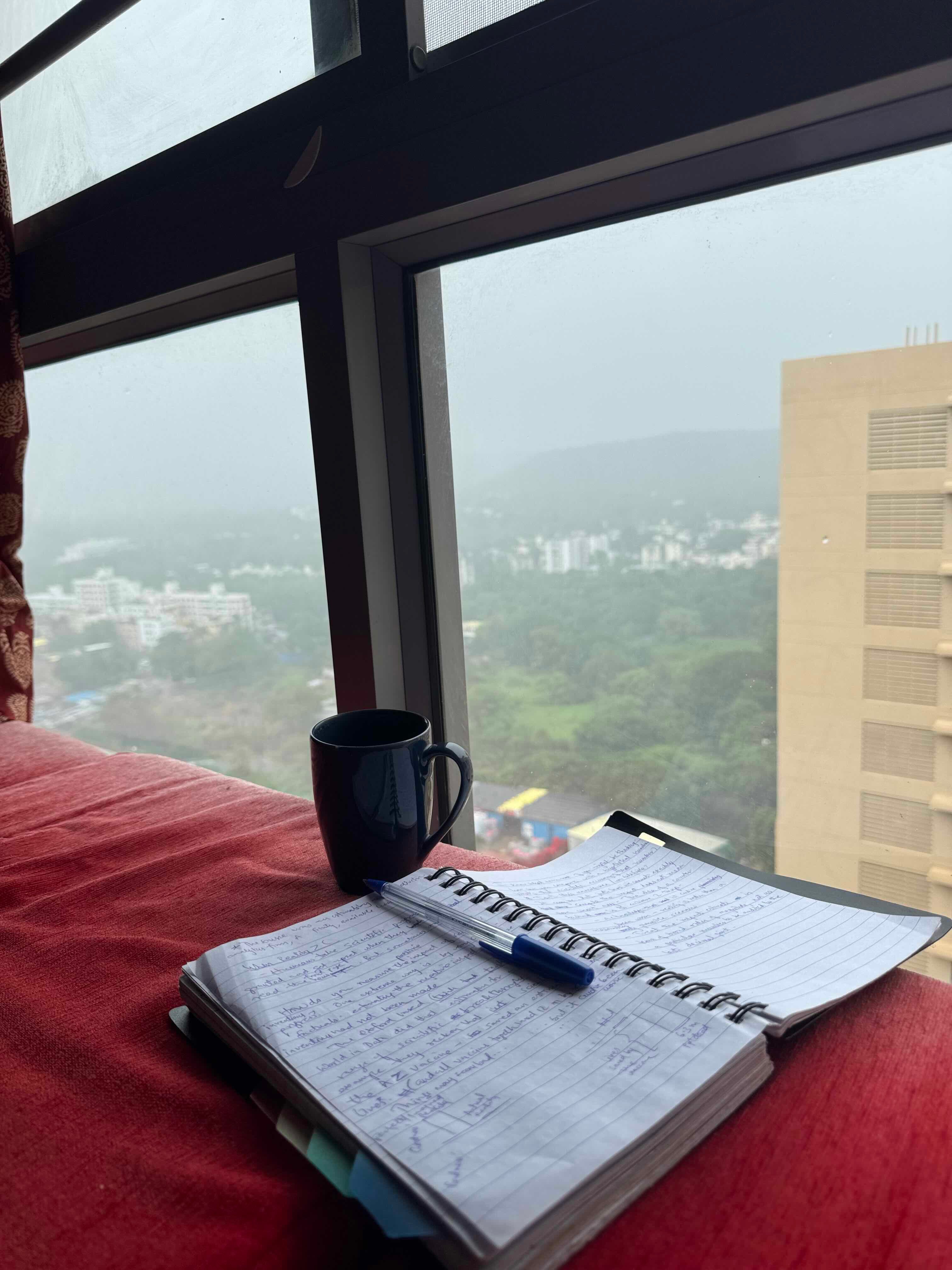
This is a rare occurrence, though. Most of the time it’s spent in front of the computer only… 🙂
And now, on to the newsletter.
Thanks for reading The Story Rules Newsletter! Subscribe for free to receive new posts and support my work.
Welcome to the one hundred seventy-ninth edition of ‘3-to-1 by Story Rules‘*.
A newsletter recommending good examples of storytelling across:
- 3 tweets, and
- 1 long-form content piece
Let’s dive in.
𝕏 3 Tweets of the week
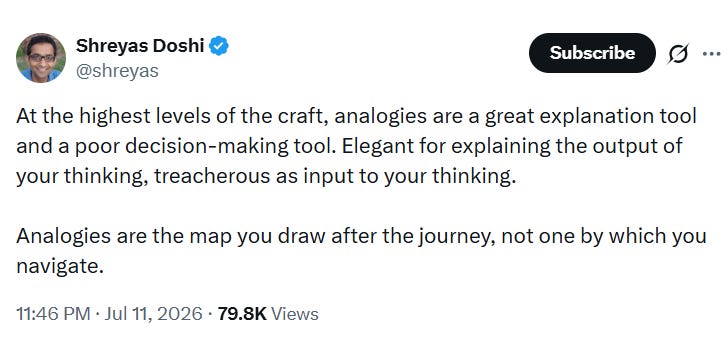
Great insight on the need for caution when using analogies.
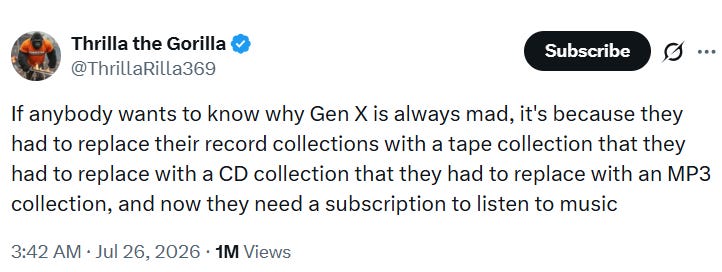
Well, I didn’t have a record collection.
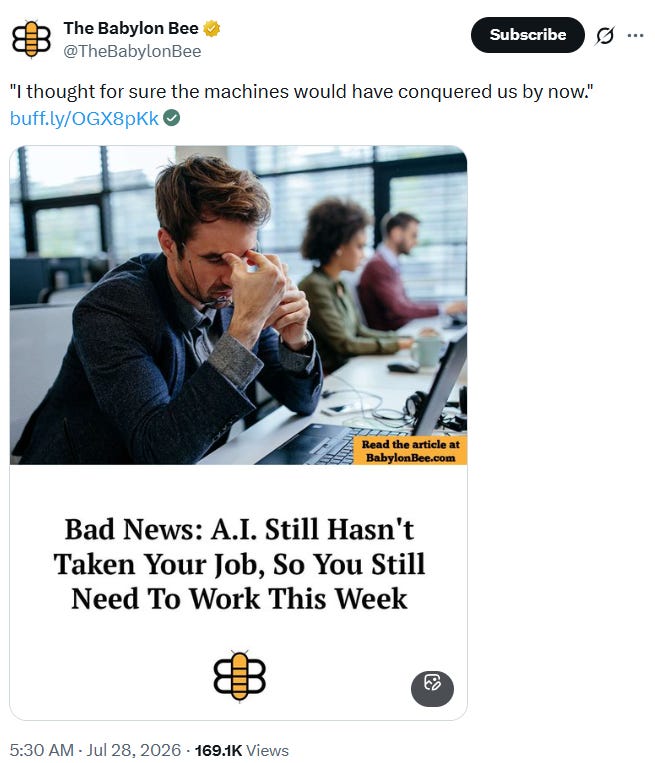
Haha, you’d think it’s about time, right?
🎧 1 long-form listen of the week
This new podcast brings three top-notch thinkers—Amit Varma (The Seen and the Unseen), Shruti Rajagopalan (Ideas of India) and Pranay Kotasthane (Takshashila Institute)—on one platform.
I have individually followed each of them, and it’s great to see them all together in this forum. Looking forward to the episodes!
The pilot episode focuses on the right usage of AI in writing.
Amit is very clear—use AI extensively for research, but do not use it for writing:
Varma: When writing students ask me – should I use AI for my writing – I really have a three-part answer. Number one, use it extensively for research and brainstorming. Number two, never, without exception, use it for writing. And number three, rarely use it for editing.
On the third point – rarely use it for editing. It’s not exactly a never, it’s rarely. And the reason I say that is that my worry goes back to that old cliché about a tool becoming a crutch. If you start relying on it for editing, then the danger is that you’re not thinking for yourself enough, and that affects the quality of your writing and the quality of your thinking.
The Joan Didion line—‘I do not know what I think until I write it down’— must be among the most quoted ones about writing:
Varma: Writing is not just how we communicate. Writing is how we think. Joan Didion once said: ‘I do not know what I think until I write it down.’ The great economist and author Deirdre McCloskey used to speak about how research is a part of writing. People think first you do research, then you do the writing. That’s not the case. Research is a part of writing.
When you write, your brain goes into all kinds of directions. Ideas come to you which weren’t there before. When you have to set something out in clear language – if that is your ethic, as it should be – then you instantly realise, oh, these are the gaps in my knowledge. These are the holes in my argument. This is where I need to work.
Shruti adds another quotable line—thinking without writing is daydreaming:
Rajagopalan: Thinking is writing. In fact, the great Richard Wagner – who’s one of my professors, not the music composer, the economist – he always used to tell us that thinking without writing is daydreaming. And it’s completely true. You make lots and lots of leaps in logic.
If your prompt is to write like Paul Graham, overall writing will get better and I can’t complain about that – we’ll read much less slop. But on the other hand, it doesn’t mean you can think like Paul Graham. Because Paul Graham is able to write the way he does because he’s put in all those years and he has the eye and the taste and the judgment and the experience.
Shruti does mention that she uses Claude heavily as an editor, but not as a writer:
Rajagopalan: You split the answer up in three parts – use it for research and brainstorming, never use it for writing, don’t use it for editing. I use Claude extensively for editing. I actually find that it oftentimes gives me great editorial comments.
I found it extraordinarily useful as an editor and also incredible for brainstorming. I don’t use it much for writing because I just think it doesn’t sound like me. I don’t know if it sounds good or bad – I’m not able to judge – but it definitely doesn’t sound like me. And I’d rather sound like me even if that’s bad, than sound like Paul Graham or Alice Munro, the most amazing writer in the world, if I’m putting my name on it.
Pranay and Amit make an additional point—if we use AI to write, we lose the intrinsic reward of creating something:
Kotasthane: AI is really bad at writing, but that’s because you’re using a general purpose AI to do writing. It’s like you’re having an all-rounder and you’re asking them to open the batting, open the bowling and field in the slips to a fast bowler. There will be better AIs which are trained to write and write well, which will have fewer tells. So I think the other two reasons are more extrinsic – but writing’s value is more intrinsic.
Varma: The fundamental thing to think about is the difference between extrinsic locus and intrinsic locus. What I keep telling people is that if you are going to be motivated by the outside world – how much applause do I get, how much validation do I get – you can never be happy. It’s also a race to mediocrity, because then you’re constantly second-guessing yourself and never finding your true authentic self. But if you instead focus on what you truly want, what makes you happy, what you like doing – then that’s a way out.
So even if one day AI writes better than any of us can, that destroys the extrinsic locus – maybe you won’t get the applause because there’s so much good writing out there. But the intrinsic locus – that I write because I love to write, I love to tell stories, I write to make myself better, I write to make my future self smarter – that doesn’t go away.
Shruti makes an interesting counterpoint—if AI democratises the generation of polished prose, can we just judge the ideas rather than packaging?
Rajagopalan: Elites are used to reading things that are written in a very particular way and are polished and written in someone’s own voice. But we’ve not managed to democratise writing, because we’ve not managed to democratise education at the level of democratising writing. But everyone has great ideas.
So now my challenge to me personally is – it doesn’t matter how it’s written, can I actually judge the idea more than the style of writing, and not use the style of writing as a marker for ‘is this a good idea?’ Because we all do that a lot. When something is really well written we get so impressed by it. That to me is now the new challenge.
It used to be the same thing with people who couldn’t speak English well and would mispronounce things because they’d learned from reading and not from speaking, or people who spell things very badly. Now as those problems go away – how do we actually evaluate ideas in the new world? And how do we keep our mind sharp enough to spot a good idea irrespective of the packaging it’s in?
Pranay shares how, at the Takshashila School for Public Policy, they are using AI for better dissemination and curation, among other uses:
Kotasthane: One is just dissemination – you can complement the kinds of things you could do. Earlier you would write a report, which is what we always do as think-tankies. But now you can actually create another form for the output, which you wouldn’t have been able to do earlier, or you would have needed a two-person team to make.
(For example) I can write a report on how critical minerals are important for India as a PDF of 30 pages, or I can actually create a dashboard where people can really play with what does criticality mean, change those parameters, and then see which of the minerals are more critical from the Indian perspective. Many people at Takshashila have created dashboards for the Iran war – a very good visual representation of where are the drones coming from, where are the ships blocked. Now you are able to do that magically, with people who’ve never done coding before.
The second way is curation. I’d want to have an institutional brain for Takshashila. In an organisation we often have knowledge which is in some PDF document which you will forget, and a new joinee doesn’t know it exists. You can create a staff handbook and say RTFM – read the effing manual – but no one reads the manual properly. Curation is going to be the big game. It can really make knowledge travel much faster.
This point is about economics and public policy. Amit makes an impassioned plea to government planners to let prices do their magic and to avoid distortionary interventions that end up making things worse:
Varma: How is decentralised knowledge communicated? It’s communicated through the magic of prices. Let’s say a copper factory providing 30% of the copper in the country shuts down. How do you communicate that? A central planner would have a very difficult time – they get to know of it late, it’s a maddening problem. But prices immediately communicate that, because if supply goes down when demand stays stable, prices go up. When prices go up, people adjust – somebody may say I will use steel instead of copper, or they will economise in different ways. And when the price of something goes up, it incentivises people to actually produce more of that scarce commodity. Tyler Cowen and Alex Tabarrok have said a price is a signal wrapped up in an incentive. That is such a beautiful quote. It should be on t-shirts everywhere.
My central learning from that essay – and even now I get goosebumps when I think about it – is that prices are how we talk to each other. Prices are how people in a society can communicate their needs to others who then fulfil their needs in return for something. It’s a positive sum game. Everybody is better off.
Prices are a language – which is why it is criminal when you stop people talking to each other, when you stop people in society making each other better off. All kinds of price controls corrupt these signals. They come in the way of that conversation. There is static where once there was clarity and there was communication. The sound of a billion people saying ‘I want this’ and a billion other people saying ‘I’ll give this to you.’
That’s all from this week’s edition.
Photo by Diana Polekhina on Unsplash