Storytelling Insights from Pixar

As you may have read, Penguin has greenlit my second book! 🙂
You can read more details here.
The next 6 months will be super busy and focused on this project! Wish me luck 🙂
And now, on to the newsletter.
Thanks for reading The Story Rules Newsletter! Subscribe for free to receive new posts and support my work.
Welcome to the one hundred seventy-fifth edition of ‘3-to-1 by Story Rules‘*.
A newsletter recommending good examples of storytelling across:
- 3 tweets, and
- 1 long-form content piece
Let’s dive in.
𝕏 3 Tweets of the week
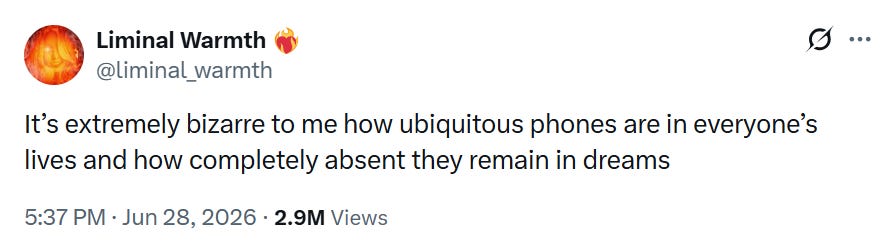
Such an interesting observation!
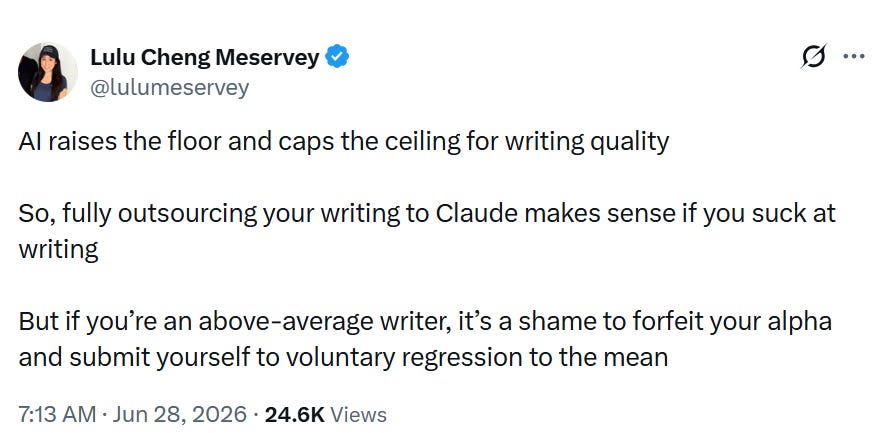
I could not have said this better. This tweet should be framed.
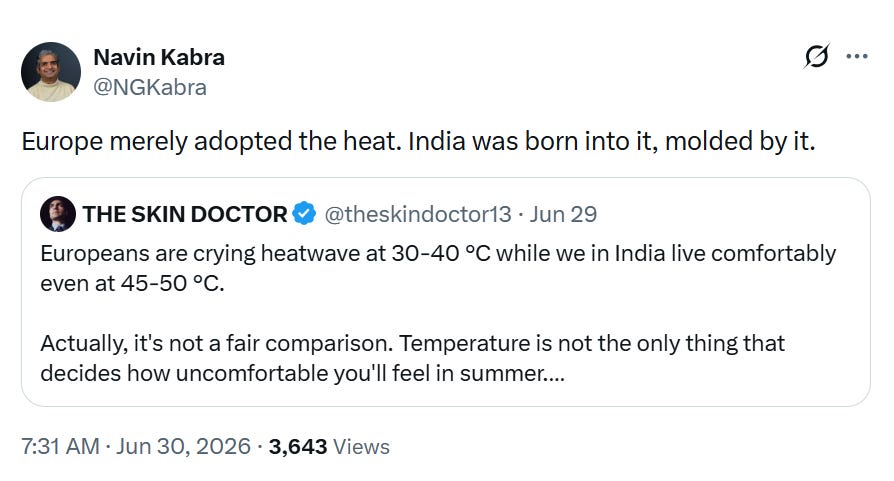
Haha, lovely ‘Dark Knight Rises’ reference!
🎧 1 long-form listen of the week
Andrew Stanton is the brilliant Pixar director behind movies like Finding Nemo, Wall-E, and now Toy Story 5.
I’m a big fan of Pixar in general… and loved Stanton’s TED talk on the art of storytelling.
This conversation with David Perell shares many cool insights and tactics on how Pixar approaches storytelling.
Stanton starts with something counter-intuitive: Pixar creators write for themselves, not for kids:
Stanton: We’ve never written for kids. We’ve just written for ourselves, so I guess we’re just immature. We’ve never left our childhood. Our childhood meant a lot to us. We’re definitely in the Peter Pan world all the time. There was a sophistication of cinema and storytelling that I didn’t understand had to be exclusive to the adults. I can speak for everybody else at Pixar – we just made what we would want to see and just made sure that we weren’t accidentally offending or excluding younger ages in the means.
Kids are really good at understanding adults, especially non-verbal cues:
Stanton: I’ve never worried for five seconds about a kid understanding what we’re doing. Kids are really good, really good at trying to figure out what the adults are talking about, because they spend their first five years with everybody physically and mentally talking over their heads and not including them and they’re figuring it out. They are huge readers of gestures and tone and body language. They’re way better at it – we get soft and lazy as adults. So I’ve never worried about the kids. They’ll figure it out. If we’re truthful about what we’re doing and truthful about what we’re expressing, they’ll get it.
Pixar does a lot of screenings to test audiences. But more than what the test audiences say after the screening ends, Pixar observes how they behave when the movie is on:
Stanton: When everybody’s honest is when the lights are down and the movie’s playing and you can literally see them in the dark – laughing, smiling, leaning forward. And even if the lights come up and they say, ‘I didn’t like it,’ I believe how they were when the lights were down. Tell me what you do, not what you say. And that’s really where we are taking notes.
You don’t get to the good sentence until you write the bad one:
Stanton: I’ll say: just freaking write the sentence. And I’ll tell you right now, it’s going to be bad. So pressure’s off. But I’m telling you, you don’t get to the nice sentence until you’ve written the bad sentence. So you’re just delaying getting to the nice sentence. Just write the bad sentence. If somebody could tell you and promise you that on the 10th try, you will nail it – you wouldn’t piss away all this time on the first, second, third, fourth, fifth, sixth, seventh, and eighth. You’d get a rigour to it and you’d just commit to looking bad at your job for a while to get to the really good stuff.
I loved this anecdote that Stanton shares about how he got to the core theme of Finding Nemo:
Stanton: For Nemo, the sentence that I finally keyed in on after about three years was: fear denies a good father from being one. If I can find that within the last year and a half, it helps me hone and focus on anything that I have executed or have left to execute, because now I know exactly what I’m saying. Fear was the main character. Denies was the conflict. So everything was denying him from being a good father until he conquered that.
It was just an experience I was having with my young son. I was busy on A Bug’s Life and he was about four and I wasn’t seeing him enough. I would spend the whole time going, ‘Don’t touch that. Be careful. Don’t run into the street.’ And I was being so overprotective, I was basically pissing away the connection time. I was there out of pure love and desire. So I said, this must be such a common problem for parents that have every good intention.
Contrast is powerful… which is why opposites attract in the movies:
Perell: What makes for a good love story, a good romance?
Stanton: Opposites always helps. Opposites. It creates conflict, creates drama. We learned that big time with Toy Story – on a buddy movie, people with opposing agendas, opposing beliefs. They don’t have to be 100% opposite of each other, but you want some sort of conflict. Some sort of obstacle in the way of them just getting along, or else there’s just no drama. And then literally visually, he was a box, she was a circle. It just all adds to the tension of will they, won’t they.
“Drama is anticipation mingled with uncertainty”:
Perell: There’s a quote from William Archer – ‘Drama is anticipation mingled with uncertainty.’
Stanton: Best definition of drama I’ve ever heard. That’s all you’re trying to do. Can you create a situation in every beat of your story that makes the person want to know what will happen next? And I don’t mean like a mystery. That’s the big obvious low-hanging fruit. But how do you write what somebody says so that you’re dying to know what the next person’s going to say back?
What if you and I are talking and there keeps being a tapping at the window while we’re trying to talk? That adds some unknowability, some uncertainty. And if the tapping gets a little louder and a little more insistent – it feels like, when’s somebody going to finally break and address it? That’s drama mingled with uncertainty.
The cable car analogy – storytelling as staying clamped to a chain that never stops moving.
Stanton: In San Francisco we have cable cars, and if you understand anything about the making of cable cars – there’s a chain running under the street that’s moving at all times. And all the cable operator does with this big clamp is clamp onto the chain and it pulls them up the hill and down the hill. And all I’m ever doing when I’m helping other people with their stories or analysing my own story is: when did we accidentally unclamp, or did we ever clamp? Because if you’ve done it right and you’ve really honed it, you’re clamped the whole time. That’s the goal of storytelling – keeping you so engaged that you never thought about anything else.
What makes a great reveal – Aristotle’s formula of “surprising yet inevitable in retrospect”:
Perell: There’s a line from Aristotle where he says it’s surprising in the moment but inevitable in retrospect. Stanton: It’s the combination – surprising and inevitable – because you don’t want to see it coming, but when it happens there’s no better answer. Of course, it had to be like that. And that’s really hard.
The ‘22 rules of storytelling’ from Pixar is a myth!:
Stanton: Those were not generated by us. That was, to my knowledge, an ex-Pixar employee that had come up with their own set of observations and rules. I’m not saying we didn’t necessarily follow some of those things, but there’s never been a rule book and there’s never been tenets that we follow that are said or written down. So that’s become a myth. And I’m here to tell you that just because it’s online doesn’t mean it’s real.
Change is non-negotiable in storytelling – even a rock changes:
Stanton: Lajos Egri says in The Art of Dramatic Writing – even a rock changes. It grows moss, it gets damp, it dries off in the sun. Nothing stays the same. I think the cable car gets disconnected and the beach ball disappears on a fundamental level when there’s not enough change. But change can come in so many forms. It can come from an eye shift when it’s cinematic. It can come from a pause. Just – it was active, then it wasn’t. Change is kind of an umbrella for everything.
That’s all from this week’s edition.
Photo by Diana Polekhina on Unsplash